A meaningful personalised gift is not simply a standard product with a name added to it. It is a gift chosen around one person: their story, their habits, their space and the detail that makes the object unmistakably theirs.
The most reliable way to choose one is to begin with the recipient, identify what connects you, and only then decide whether that meaning belongs in a photograph, a name, a date, a place, a message or a physical keepsake.
This guide gives you a practical framework for choosing a personalised gift that feels relevant, looks appropriate and has a clear reason to be kept.
How Do You Choose a Personalised Gift?
Use these five decisions in order:
- Define the recipient. Consider their age, style, home, routines and the objects they already choose to keep.
- Identify the connection. Decide whether the gift should represent a person, relationship, memory, place, milestone or occasion.
- Select the personal detail. Choose the name, photograph, date, location, birth information or message that expresses that connection most clearly.
- Match the detail to a suitable format. Decide whether it belongs on a lamp, sign, keepsake box, useful object or celebration piece.
- Check every practical detail. Review spelling, image quality, options, dimensions, display location and the date by which the gift is needed.
This order prevents the most common mistake: falling in love with a product first and forcing personalisation onto it afterwards.
What Makes a Personalised Gift Feel Truly Personal?
A gift feels personal when the custom detail changes its identity. If removing the name, photograph, date or place also removes the reason that the object belongs to that recipient, the personalisation is doing real work.
Most meaningful personalised gifts operate at one or more of these levels:
- Identity: a name, initials or family wording makes the piece clearly connected to one person or household.
- Memory: a photograph, date, location or event links the object to something that actually happened.
- Milestone: birth details, a wedding date, a first home or an important age records a moment of change.
- Relationship: a shared image, private phrase or meaningful place represents the bond between giver and recipient.
- Belonging: a room sign, family piece or personalised everyday object gives the recipient a visible sense of ownership.
More text does not automatically create more meaning. One precise detail is often stronger than several unrelated details competing for attention.
Start With the Recipient, Not With a Gift Category
Labels such as “gift for her”, “gift for him” or “gift for a couple” are broad shopping shortcuts. They do not explain what one specific person will value. A better decision begins with observation.
Ask:
- Do they display photographs, or do they prefer private keepsakes?
- Do they enjoy decorative objects, practical objects or both?
- Is their home warm and natural, clean and modern, colourful or minimal?
- Do they collect cards, baby items, travel memories or small mementos?
- Would they enjoy seeing the gift every day, or would they prefer to open it occasionally?
- Are they emotionally attached to a person, a date, a place, a photograph or a life event?
The answers point toward the right type of gift. A person who keeps family photographs visible may appreciate a photo-based lamp. Someone who values dates and places may connect more strongly with a star map. New parents may need a place for physical memories, while a child may respond most naturally to seeing their own name become part of their room.
Choose the Right Type of Personalisation
The personal detail should lead the product choice. Different details communicate different kinds of meaning.
Name or Initials
A name is enough when identity is the main message. This works particularly well for children’s rooms, reading gifts, family pieces and objects intended for one person’s everyday space.
For example, a Nursery Name Sign makes a child’s name part of the room, while a DreamLight™ personalised children’s light combines the name with an illuminated display. A set of personalised wooden bookmarks is a more practical choice for someone who reads regularly.
Photograph or Portrait
Choose a photograph when the relationship is best represented by a face, pose or shared moment. The strongest image is not always the most formal one; it is the image in which the people, pet or moment can be recognised clearly.
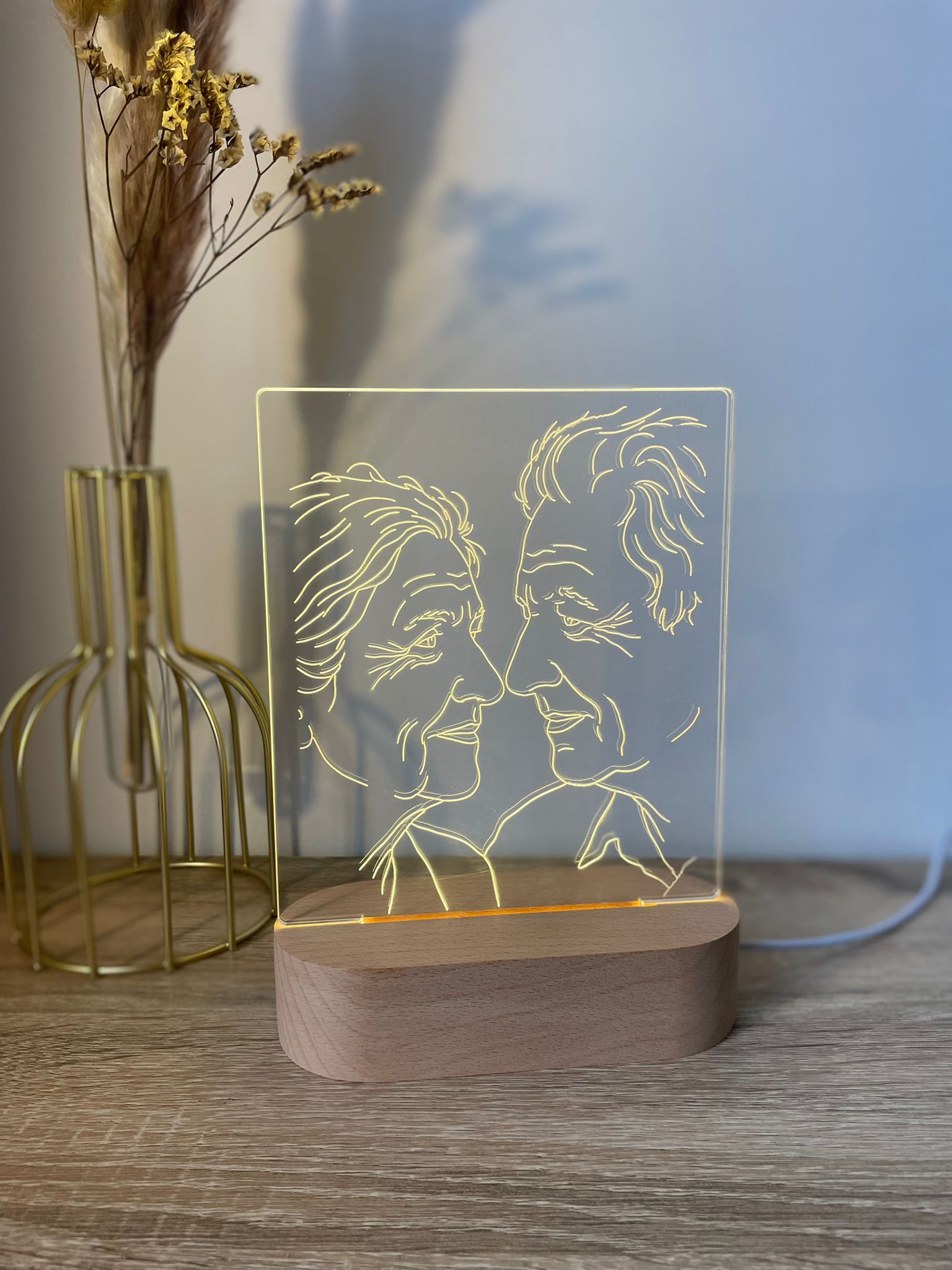
AuraLine™ turns a chosen photograph into an illuminated line-art portrait. StoryFrame™ presents a personalised line-art design in a framed lamp format. Both suit gifts centred on a couple, family, child, friendship or pet.
Date and Location
A date and place are effective when one moment changed the story. This may be a first meeting, proposal, wedding, birth, move, journey or another event that is meaningful because of where and when it happened.
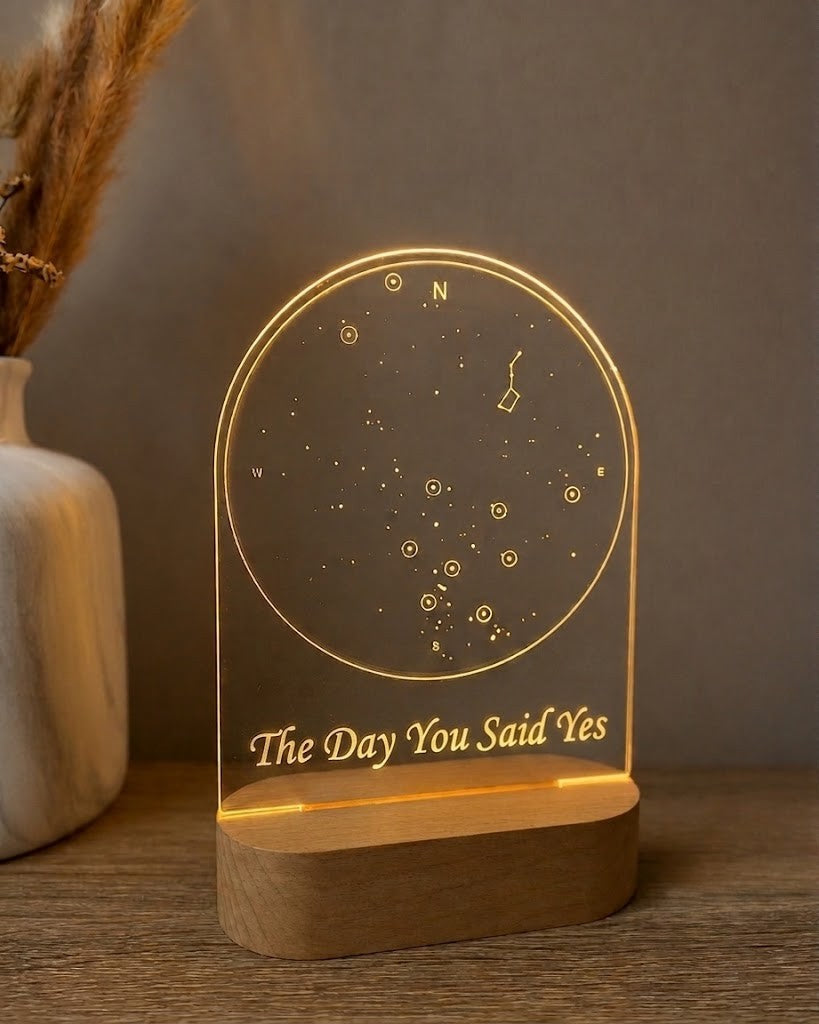
NovaMap™ is designed around a meaningful date and location, turning that information into a personalised star map lamp. It is a stronger choice than a general message when the memory is inseparable from a specific night and place.
Birth Details
A baby’s name, birth date, time, weight and length form a factual record of one beginning. These details remain specific long after the newborn stage.
FirstLight™ displays birth details as an illuminated keepsake. A Personalised Baby Keepsake Box serves a different purpose: it gives cards, photographs and other small memories a dedicated place. Choose between display and storage according to what the parents will value most.
Names, Dates and Wording for an Event
For weddings and celebrations, personalisation can guide guests, coordinate the visual setting and remain part of the event photographs. Names, dates and short wording should be easy to read and appropriate to the size of the piece.
A Personalised Wedding Welcome Sign creates an entrance feature, while a Personalised Cake Topper connects the cake to the person, couple or occasion. The Wedding & Events collection brings together personalised pieces designed for celebrations.
Match the Gift Format to the Recipient’s Real Life
The personal detail can be right while the product format is wrong. Before ordering, decide where the finished piece will go and how the recipient is likely to interact with it.
- Choose an illuminated gift when the recipient has a shelf, bedside table, desk or memory corner and would enjoy seeing the design both during the day and after dark. Explore the personalised lamps collection.
- Choose a keepsake box when the recipient saves physical memories and needs one protected place for them.
- Choose personalised room decor when a child’s name or identity should become part of a nursery or bedroom.
- Choose an event piece when the personalisation must function during a wedding, birthday or celebration.
- Choose a useful personalised object when the recipient prefers practical gifts and has little interest in additional decor.
When you cannot confidently choose the format, design or material, an AtaNova Gift Card is more considerate than guessing. It allows the recipient to choose the product and personal details themselves.
How to Choose a Personalised Gift by Recipient
For a Partner or Couple
Choose one shared memory rather than a general romantic symbol. A photograph, first-meeting place, wedding date or private phrase usually creates a more recognisable connection. The gift should represent the relationship, not simply the occasion on the calendar.
For a New Parent
Decide whether the gift should record information, display the child’s identity or store physical memories. A birth-stat lamp, name sign and keepsake box solve different needs and should not be treated as interchangeable products.
For a Child
Use the child’s name or a design suited to their room, and consider how the piece will fit as they grow. The best choice feels like part of their own space rather than a temporary decoration selected only for adults.
For Parents or Grandparents
Family photographs, grandchildren’s names and shared milestones often matter more than trend-based wording. Choose a piece that can remain visible or easily accessible in the home.
For a Friend, Teacher or Colleague
Keep the personalisation thoughtful but proportionate to the relationship. A name, initials or short message on a useful object may be more suitable than an intimate photograph or highly emotional wording.
For Someone Who Seems to Have Everything
Do not try to compete with what they already own. Choose something that cannot be taken from a standard shelf: their date, place, portrait, name or memory presented in a format that suits their life.
Match the Gift to the Occasion Without Making It Temporary
The occasion explains why the gift is being given, but the personal detail determines whether it remains meaningful afterwards.
- Birthday: use identity, a meaningful photograph, a personal interest or a milestone age.
- Anniversary: use the date, place or photograph that represents the relationship rather than relying only on the number of years.
- Wedding or engagement: use the couple’s names, date, venue or shared image in a form they can keep after the event.
- New baby, baptism or naming ceremony: choose between birth information, the child’s name, room display or memory storage.
- Housewarming: consider a family name, first-home date, city or memory connected to the move.
- Christmas, Mother’s Day or Father’s Day: use a family detail that remains relevant after the seasonal occasion has passed.
For any fixed date, order early enough to enter the details carefully and review a Design Proof when the selected product includes one. The relevant product page should remain the final reference for its current options and ordering information.
Should You Choose Wood, Acrylic or an Illuminated Design?
Material affects how the personalisation looks, how much contrast it creates and where the finished piece belongs.
- Natural wood offers visible grain and a warm, tactile character. It suits keepsake boxes, bookmarks, nursery decor and celebration details where the material itself is part of the design.
- Clear acrylic creates a clean, contemporary surface for precise engraving. When paired with an LED base, engraved lines catch the light.
- White, black or mirror acrylic creates stronger visual contrast and can be suited to modern events, wedding details and celebration pieces.
- Wood and acrylic together combine warmth with precision, making the pairing suitable for personalised lamps and mixed-material decor.
Choose the material according to the recipient’s space, the visibility required and whether the object will be handled, stored or displayed.
How Much Personalisation Is Enough?
The clearest gifts usually have one primary detail and, when needed, one supporting detail.
- Name + date: suitable for births, weddings, anniversaries and milestones.
- Photograph + short wording: suitable when the image already carries most of the meaning.
- Date + location: suitable for a place-based memory or star map.
- Birth details + optional short message: suitable when the factual record is the main design.
- Event names + welcome wording: suitable for wedding and celebration signage.
Long quotations, several dates and multiple unrelated memories can make the design less focused. When every detail seems important, choose the one that best represents the reason for the gift and place the rest in a card.
What Should You Check Before Ordering?
Personalised production depends on the information supplied. Check each of the following before completing the order and again when reviewing a Design Proof:
- Names: spelling, capital letters, accents and the preferred form of the name.
- Dates and times: the correct day, month, year and time format.
- Location: the city, venue or place that should appear.
- Photograph: clear focus, useful lighting and an unobstructed view of the important subject.
- Message: concise wording that can remain readable and balanced.
- Options: selected material, size, shape, light type, quantity and add-ons.
- Display location: sufficient space and an appropriate position for the finished item.
- Intended use: whether the item is decorative, practical, stored privately or used during an event.
- Required date: the day by which the order must arrive.
- Design Proof: every visible detail before approval.
For an overview of the ordering and approval process, visit How It Works.
Standard Personalisation or a Bespoke Project?
A standard personalised product is appropriate when the existing format already suits the idea and you only need to add the supported name, date, photograph, location or wording.
A bespoke project is more appropriate when you require a different material, unusual dimensions, a new shape, a logo, a coordinated event set, a larger quantity or an idea that is not available in the standard collection.
AtaNova reviews individual, event and business requests through Custom Projects & Bespoke Orders. Use that route when adapting a standard product would still not solve the actual need.
Which AtaNova Personalised Gift Fits the Story?
- The photograph is the centre of the gift: consider AuraLine™ or StoryFrame™.
- A date and place define the memory: consider NovaMap™.
- A baby’s birth information should be displayed: consider FirstLight™.
- A child’s name should become part of the room: consider DreamLight™ or a Nursery Name Sign.
- Physical memories need a dedicated place: consider a Personalised Baby Keepsake Box.
- The gift is connected to a wedding or celebration: explore the Wedding & Events collection.
- The recipient should choose: select an AtaNova Gift Card.
Personalisation Should Clarify the Meaning
The purpose of personalisation is not to fill every available space. It is to make the connection between object and recipient clear.
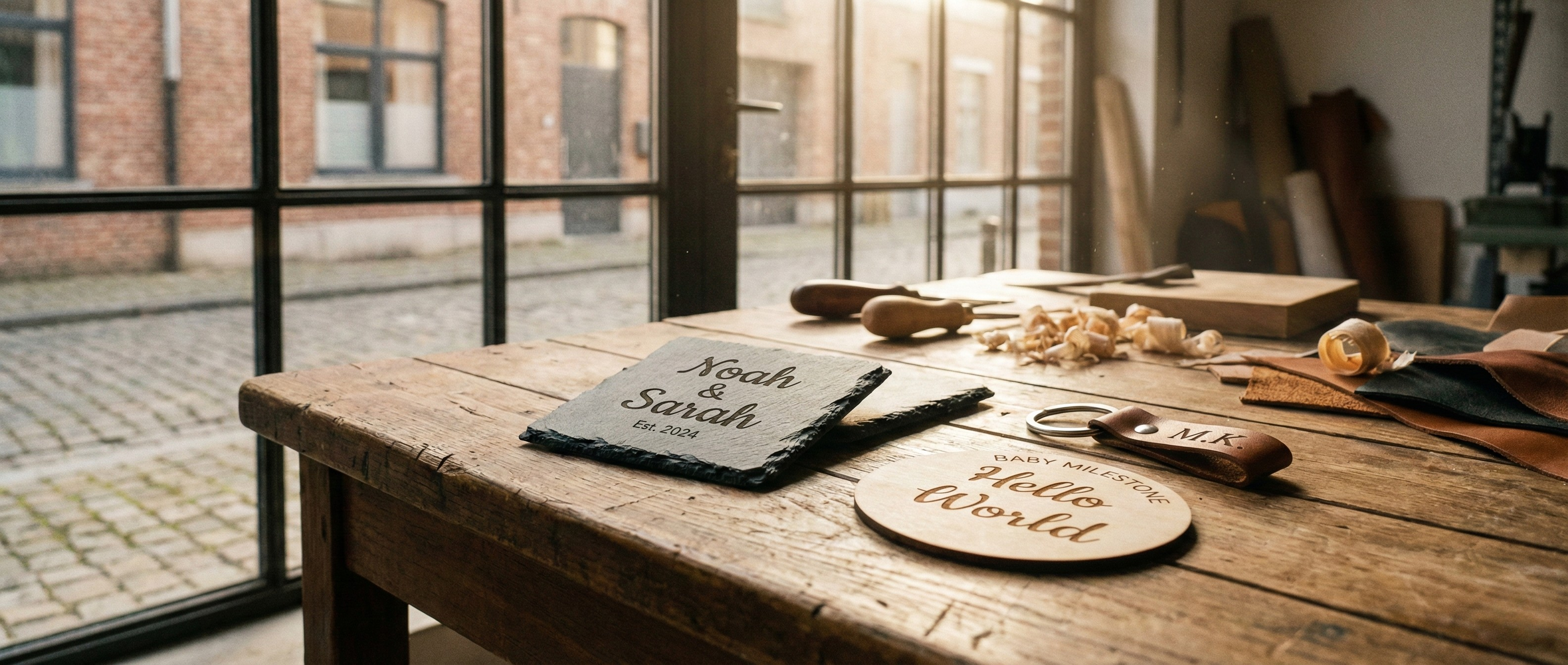
AtaNova creates made-to-order personalised lamps, keepsakes, signs and celebration pieces in our Antwerp atelier. Depending on the selected product, the design may be based on a name, photograph, date, location, birth details or short custom wording. Explore the AtaNova personalised gift collection by first deciding which detail matters most.
The most useful final question is simple: Which detail would make this person immediately understand that the gift was chosen and made for them?
Once that answer is clear, choose the format that presents it naturally and fits the recipient’s real life.
Frequently Asked Questions
What makes a good personalised gift?
A good personalised gift connects a suitable product with one recognisable detail about the recipient, relationship or occasion. The personalisation should explain why the object belongs to that person rather than acting as decoration alone.
How do I choose a personalised gift for someone?
Begin with the recipient’s habits, style and space. Identify the memory or relationship you want to represent, choose the name, photograph, date, place or message that carries it, and then select a format they will use, display or keep.
What can be added to a personalised gift?
Depending on the product, personalisation may include a name, initials, date, time, location, photograph, portrait, birth details, short message or event wording. Use only details that support one clear story.
Is a name enough to make a gift personal?
Yes, when identity is the main purpose, such as a child’s name sign, personalised bookmark or room light. For relationship and milestone gifts, a photograph, date, location or short message may create a stronger connection.
What should I check before ordering a personalised gift?
Check spelling, accents, dates, times, locations, photograph quality, message length, selected options, quantity, display location and the required date. Review every detail of the Design Proof when one is provided.
What if I do not know which design the recipient would choose?
Choose a gift card rather than guessing the product, design or material they would prefer. This allows the recipient to select the format and personal details themselves.
How early should I order a personalised gift?
Order as early as practical, especially for weddings, birthdays and other fixed dates. Allow time to enter accurate details and review any Design Proof. Use the current information on the relevant product page as the final ordering reference.