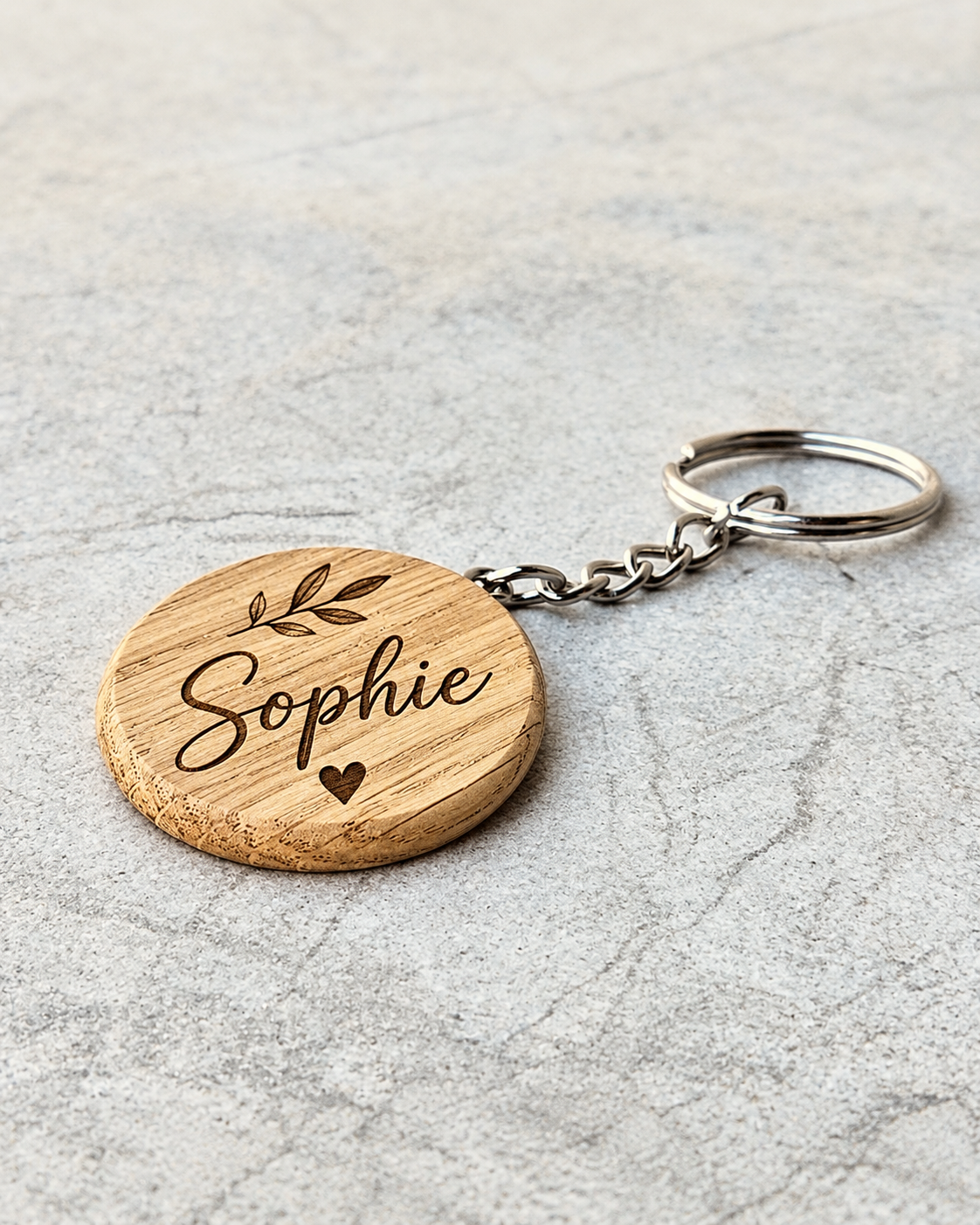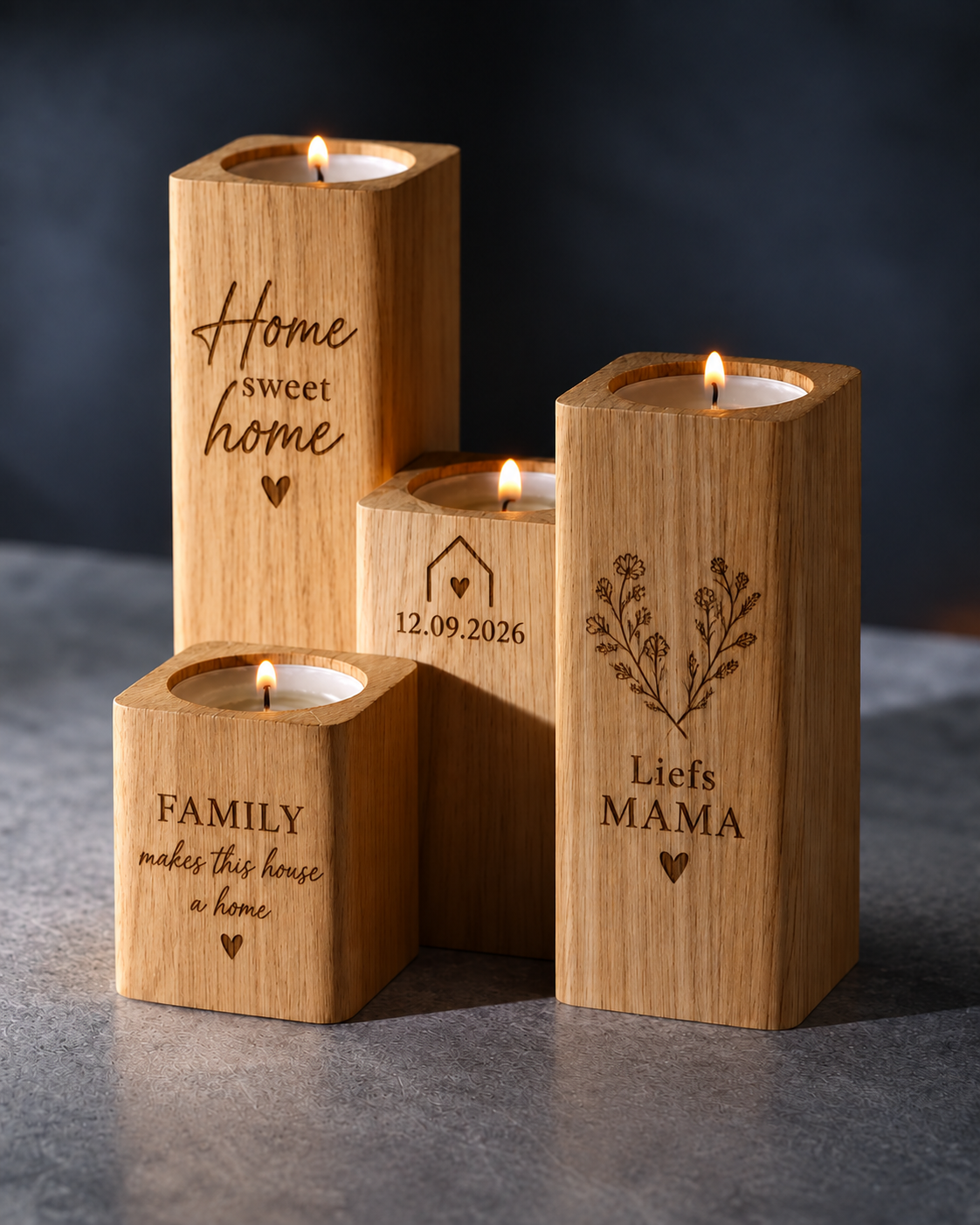
Choose beech for a lighter, calmer visual mood and oak for a warmer, more visibly grained character. Neither is universally better: the material becomes part of the atmosphere the object creates in a room, and the surrounding light, colours and textiles can change how both woods are perceived.
This guide looks at beech versus oak as an interior choice: how each can influence the visual mood of personalised wooden decor, how lighting and surrounding materials change the effect, and how to choose between them for pieces such as tealight holders, clocks, coasters and serving accessories.
Beech or oak? Start with the mood, not the label
If you are choosing between beech and oak for a personalised piece, begin with the room rather than the product name. Ask whether you want the object to feel visually light and quiet, or warmer and more expressive.
| Visual direction | Beech often suits | Oak often suits |
|---|---|---|
| Overall mood | Light, calm, minimal | Warm, characterful, grounded |
| Wood appearance | Quieter, more understated grain | More visible natural grain |
| Styling partners | Daylight, linen, pale neutrals, simple forms | Candlelight, deeper textiles, warm neutrals, natural layers |
| When you want the wood to… | Support the design quietly | Be a visible part of the design |
These are styling tendencies, not technical rules. Natural wood varies from piece to piece, and the surrounding light, wall colour, textiles and furniture can change how any wooden object is perceived.
Beech: light, calm and contemporary
Beech usually reads as the quieter option in AtaNova’s current solid-wood home pieces. Its lighter appearance and more understated grain can work especially well when you want the shape, engraving or surrounding decor to stay visually prominent.
That makes beech easy to combine with pale interiors, Scandinavian-inspired styling, simple ceramics, linen, soft colours and spaces where daylight is part of the atmosphere. “Light” does not mean inexpensive or less considered; it simply describes the visual weight the wood can bring to a composition.
Oak: warm, expressive and timeless
Oak generally shows a more pronounced natural grain. In a personalised object, that means the material itself can remain clearly visible alongside the engraving. The result can feel warmer, richer and more substantial in the room without needing extra decoration.
Oak works naturally with candlelight, warm neutrals, darker textiles, leather details and interiors where natural materials are meant to be seen rather than fade into the background. A piece such as the Personalised Oak Serving Tray with Leather Handles makes that contrast particularly visible because the oak grain and leather are both part of the composition.
The same shape, a different atmosphere
A useful way to see the difference is to compare the same product in the two woods. The shape and dimensions stay the same, but the natural surface changes the overall impression.


The Personalised Wooden Tealight Holder Set is available in both solid beech and solid oak, so it is a practical example of how one design can move in two different visual directions.
Why can beech feel summery and oak feel warmer in winter?
This is best understood as a decorating association, not a rule about the wood itself. Light wood placed beside daylight, linen and soft colours can create a fresher spring or summer feeling. More visible grain combined with candlelight, deeper textiles and warm neutral colours can make oak feel especially natural in autumn and winter styling.
Change the setting and the impression changes too. Oak can look clean and modern in a bright room; beech can feel cosy beside warm textiles and low light. The season is created by the full composition, not by the species name alone.
The wood also changes how personalisation is perceived
Laser engraving remains the personal detail, but the wood surface around it influences how the finished composition is read. On a calmer-looking piece of beech, the engraved text or symbol can feel especially clean and restrained. On oak, the engraving sits alongside a more visible natural grain, so the finished piece can feel more organic and characterful.
Neither effect is universally preferable. Choose according to whether you want the personalisation to be the dominant visual detail or whether you want the natural wood pattern to share that role.
No two pieces of natural wood are fully identical. Grain, markings and colour tone can vary, and those differences are part of the material rather than a defect.
Which wood works for which kind of home piece?
- Tealight holders: choose beech when you want a quieter group of forms; choose oak when grain and candlelight should become part of the display. See the Personalised Wooden Tealight Holder Set.
- Clocks: a standing NovaClock™ in beech can feel clean and subtle, while the oak wall or standing versions bring more visible wood character to a wall, shelf or sideboard.
- Coasters: the Personalised Wooden Coaster Set is available in oak or beech, making the wood choice part of the table setting rather than only a technical product option.
- Serving pieces: oak can be especially effective when you want the serving object itself to feel like part of the table styling. The Personalised Oak Serving Tray with Leather Handles is a good example.
Choosing a wooden gift for Mum: make it fit her home
For a mother, the strongest home-focused gift is often one that still feels natural in the room after Mother’s Day, a birthday or another occasion has passed. Instead of choosing only by the message you want to engrave, look at the colours and materials she already lives with.
If her home is bright, minimal and filled with pale woods, beech may blend in more quietly. If she loves candlelight, warm neutrals, visible natural materials or richer wood textures, oak may feel more at home. For a daily ritual, an oak serving tray can frame coffee or breakfast; for a living-room detail, a personalised clock or tealight holder can become part of the interior rather than a one-day gift.
The aim is not to label one wood “more suitable for mothers”. It is to choose the wood that makes the personalised object feel as if it belongs in her home.
A simple decision guide
Choose beech if you are drawn to: light interiors, minimal forms, a calmer grain, subtle personalisation and a quieter visual presence.
Choose oak if you are drawn to: warm interiors, visible grain, natural material contrast, candlelight and a stronger wood presence.
If you still cannot decide, compare the wood against the room where the piece will actually live. The best choice is not the species with the strongest reputation; it is the one that creates the atmosphere you want around the object.
Explore personalised wood for the home
Browse the Home & Living collection to compare personalised wooden decor, clocks, table pieces and serving accessories.
Related product guide
If you are specifically choosing the four-piece candle set, continue with How to Choose and Personalise Wooden Tealight Holders: A Complete Guide.
Frequently asked questions
Is oak better quality than beech?
This guide does not treat one as universally better. They create different visual moods, and the better choice depends on the product and the interior where it will be used.
Is beech only for modern interiors?
No. Beech can work in many settings. Its lighter, calmer appearance simply makes it easy to combine with minimal and contemporary styling.
Is oak only for autumn and winter?
No. The seasonal language describes a styling mood, not a technical limitation.
Will two oak or beech pieces look exactly the same?
No. Natural wood varies in grain, markings and colour tone.