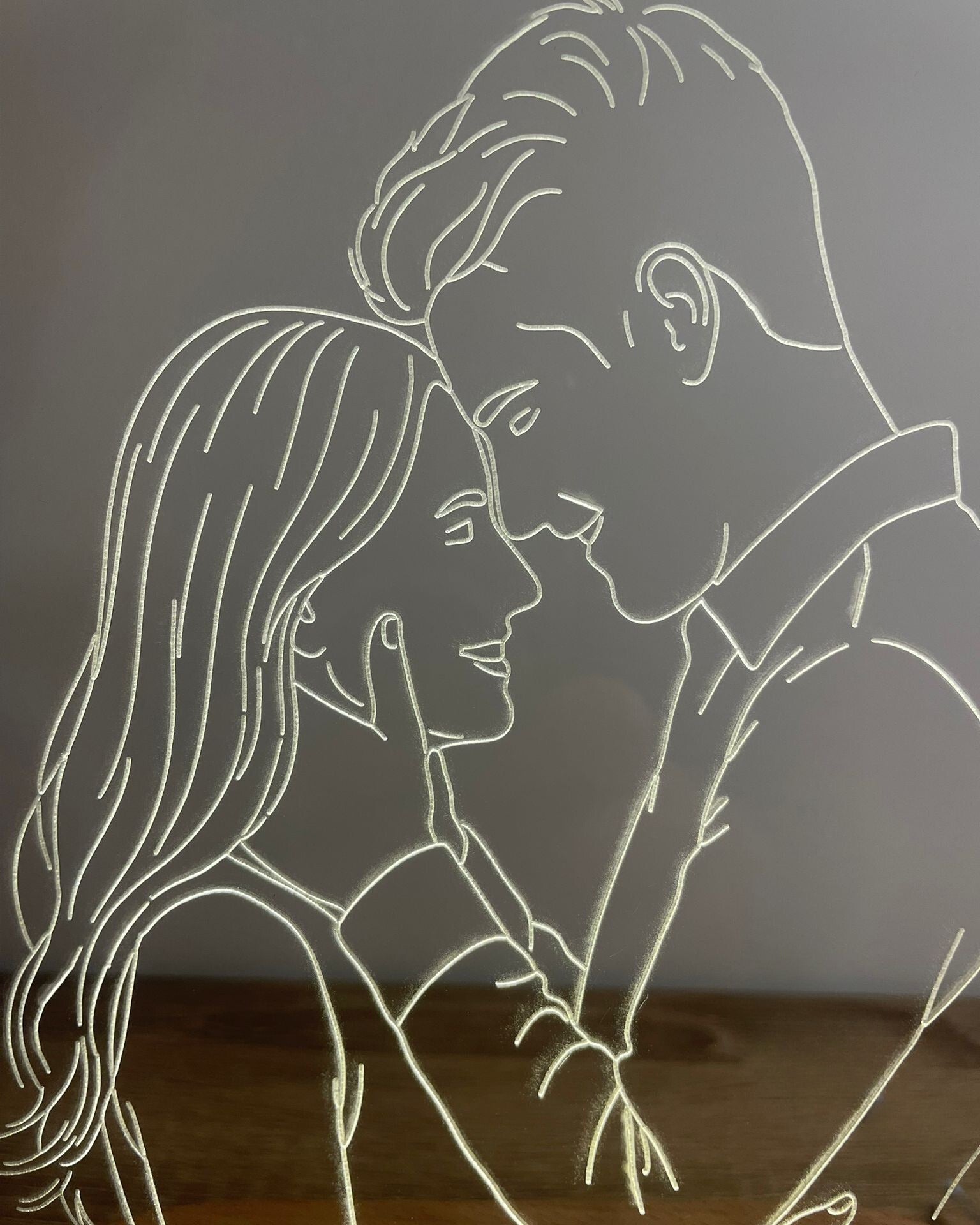
How Edge-Lit Acrylic Makes an Engraved Design Glow
Edge-lit acrylic glows because LEDs in the base send light into the edge of a clear acrylic panel. The light travels through the panel, and the laser-engraved lines interrupt that path and scatter light outward. The engraved design becomes bright and visible while most of the untouched acrylic remains clear.
The effect can look almost weightless: a name, portrait outline, star map or set of birth details appears to float in light. It is not created by printing a luminous image onto the surface, and the acrylic panel does not contain a screen or a grid of hidden LEDs. The glow comes from the way clear acrylic guides light and the way engraving changes selected parts of its surface.
How Does Edge-Lit Acrylic Work?
An edge-lit acrylic lamp uses the clear panel as a light guide. LEDs are positioned inside the base, close to the lower edge of the acrylic. When the lamp is switched on, light enters through that edge and travels through the panel.
Because the acrylic is clear and its broad surfaces are relatively smooth, much of the light remains inside instead of immediately escaping through the front or back. It reflects within the panel as it moves away from the base. When that light reaches an engraved line, dot or textured area, the smooth optical path is disrupted. Part of the light is redirected outward, making that engraved area appear illuminated.
The simplest way to understand the effect is:
- The LED base introduces light into the acrylic edge.
- The acrylic carries the light through the clear panel.
- The engraved design scatters selected light toward the viewer.
This is why the design appears bright while the surrounding transparent panel remains visually light and unobtrusive.
The Three Parts That Create the Glow
1. The LED Base
The base is both the support and the light source. Its slot holds the acrylic panel above the LEDs so light can enter through the lower edge. Good contact and correct seating matter: if the panel is not inserted properly, less light may enter the acrylic and the design can appear weaker or uneven.
AtaNova’s personalised lamps use USB-powered LED bases with either a 3-Color Light or RGB option, depending on the selected product. The lighting mode changes the colour and atmosphere of the glow, but the engraved design itself remains the same.
2. The Clear Acrylic Panel
The acrylic panel carries the light. Its clarity allows the panel to remain largely transparent when the lamp is off while still guiding LED light when the lamp is on. The panel also provides a stable surface for precise laser engraving.
Clear acrylic is especially effective for this type of design because the unengraved areas do not compete heavily with the artwork. The result is a clean contrast between transparent space and illuminated detail.
3. The Laser-Engraved Design
The engraved lines are the visible light-extraction points. Laser engraving creates a fine frosted texture in selected areas of the acrylic. Those textured areas scatter light more strongly than the untouched smooth surface, so they appear brighter.
The effect can be created with outlines, lettering, dots, symbols and carefully spaced decorative details. A design does not need to cover the entire panel to look bright. In many cases, controlled negative space makes the illuminated artwork easier to read.
Why Do Engraved Lines Glow While Clear Areas Stay Transparent?
Untouched clear acrylic lets much of the light continue travelling through the panel. Engraving changes the local surface and creates tiny irregularities. When guided light reaches those irregularities, it is redirected in many directions. Some of it exits toward the front, making the engraved mark visible.
This is also why an engraved design often looks pale or frosted in daylight but much brighter when the LED base is switched on. The engraving is already present during the day; illumination simply gives the textured lines a stronger contrast.
The glow is therefore not a coating placed on top of the acrylic. It is the interaction between the LED source, the clear panel and the physical engraved texture.
Does Total Internal Reflection Play a Role?
Yes. In simplified terms, light travelling inside a clear material can reflect at the boundary between the acrylic and the surrounding air instead of passing straight out. This helps keep light within the panel. Engraved areas disturb that controlled path and allow more light to escape where the design has been created.
An edge-lit lamp is a decorative application of the same broad light-guiding principle used in illuminated signs and light-guide panels, adapted here for a small personalised object.
Laser Engraving Creates Light, Shadow and Texture
A laser does not add colour to clear acrylic. It removes or alters a very small amount of material at the surface, creating a matte, frosted texture. When unlit, that texture can be seen as a pale line. When lit from the edge, it becomes a place where guided light exits.
Different engraving patterns can create different visual effects:
- Fine outlines: useful for line art portraits, constellations and elegant lettering.
- Closely spaced lines: create a brighter visual area but can lose definition if the design is too dense.
- Dots and small marks: work well for stars, decorative accents and subtle texture.
- Larger engraved areas: can produce a stronger luminous patch but require careful balance to avoid a heavy or cloudy appearance.
More engraving does not automatically mean a better result. A successful design balances brightness, recognisability, spacing and the size of the final acrylic panel.
What Affects the Brightness and Clarity of an Engraved Acrylic Lamp?
| Factor | Why It Matters |
|---|---|
| Panel position in the base | The lower edge needs to sit correctly above the LEDs so light can enter the acrylic efficiently. |
| Engraving density | Dense engraving can look brighter, but too many close lines may merge visually and reduce fine detail. |
| Line quality and spacing | Clean outlines and controlled spacing help the illuminated design remain readable. |
| Design scale | Very small text or facial details can be difficult to distinguish once translated into engraved lines. |
| LED colour | Different colours change the perceived contrast and mood, even though the physical engraving does not change. |
| Room lighting | The glow appears more dramatic in a dim room and more subtle in strong daylight. |
| Fingerprints, dust or scratches | Marks on the clear surface can scatter stray light and reduce the clean transparent effect. |
| Acrylic condition | A smooth, undamaged panel provides a clearer visual distinction between engraved and unengraved areas. |
Why Design Preparation Matters Before Engraving
A glowing acrylic lamp starts with a design that can survive the transition from a digital image to physical engraved lines. A screen can display tiny colour changes, soft shadows and thousands of pixels. Clear acrylic cannot reproduce all of that in the same way. The artwork must be simplified into marks that remain recognisable when illuminated.
For a photo-based design, this usually means selecting the important outlines and removing unnecessary background detail. For text, it means choosing a readable size and keeping longer wording under control. For a star map or birth-details layout, it means balancing many small elements without allowing them to overlap.
This is one reason a Design Proof before engraving matters. It lets the customer review the composition, spelling, dates and placement before the physical panel is produced.
Edge-Lit Acrylic Versus Backlit Acrylic
Edge lighting and backlighting are not the same construction.
- Edge-lit acrylic: light enters through one or more edges and travels within the panel. Engraved or textured areas redirect the light outward.
- Backlit acrylic: the light source sits behind the visible surface and shines forward through or around the material.
Edge lighting makes it possible to create a slim freestanding lamp with a mostly transparent panel. Backlighting is more commonly used when an entire face, graphic or sign needs to be illuminated from behind.
AtaNova’s engraved acrylic lamps are edge-lit from the wooden LED base. The base contains the light source; the acrylic panel guides and reveals it.
Is the Whole Acrylic Panel Illuminated?
Light travels through the panel, but the entire surface does not usually appear equally bright. The engraved areas are designed to be the main visible light-extraction points, so they stand out most strongly. The lower edge and outer edges may also show some light, especially in a darker room.
This controlled contrast is part of the appeal. The transparent areas create negative space, while the engraved artwork appears suspended within the panel.
The result is not the same as a television screen, a printed lightbox or a neon tube. It is a clear engraved object that becomes more visible when light is introduced through its edge.
Which Personalised Designs Work Well with Edge-Lit Acrylic?
Edge-lit acrylic works best when the design can be expressed through clear lines, readable text or controlled engraved detail. Different types of personalisation use the same light-guiding principle in different ways.
Photo Line Art
A photograph can be simplified into recognisable outlines and engraved into clear acrylic. The illuminated lines highlight the people, pet or moment without reproducing the original background as a full printed image. AuraLine™ uses this approach in a freestanding square panel, while StoryFrame™ presents photo-based line art in a framed format.
Star Maps
Stars, constellation lines, names, dates and location details are naturally suited to engraving because they depend on precise dots and fine marks. NovaMap™ turns a meaningful date and location into an illuminated night-sky design.
Birth Details
Names, dates, times, weight, length and birthplace can be arranged into a structured composition. FirstLight™ uses engraved typography and selected decorative elements to preserve a baby’s first details in light.
Names and Children’s Designs
A clear name combined with a simple bear, unicorn, space, moon or dinosaur design can create an easy-to-read bedroom feature. DreamLight™ uses this format for personalised children’s night lights.
Explore all five formats in the AtaNova personalised lamps collection.
Daylight Appearance Versus Night-Time Glow
An edge-lit acrylic lamp has two visual states.
- When switched off: the clear panel looks minimal, and the engraving appears as a light frosted design.
- When switched on: the engraved lines become more prominent as they scatter LED light.
The effect is usually strongest in lower ambient light, but the engraving remains visible during the day. This makes the lamp both a decorative engraved object and an illuminated display rather than a product that only works in complete darkness.
How to Keep the Glow Clear
Because stray marks can also scatter light, basic care helps preserve the clean contrast between the engraving and the transparent panel.
- Handle the acrylic by its edges where possible.
- Use a soft, dry or slightly damp microfibre cloth.
- Avoid abrasive sponges, paper towels and harsh cleaning products.
- Do not use alcohol-based cleaners on the acrylic.
- Keep the panel away from strong heat and prolonged direct sunlight.
- Insert the panel gently into the base without bending or forcing it.
- Place the lamp on a stable indoor surface.
Minor dust or fingerprints do not change the engraving itself, but they can make the panel look cloudier and create unwanted reflections when the LEDs are on.
How AtaNova Creates an Edge-Lit Personalised Lamp
- You choose the design type. Select a photo lamp, star map, birth-details lamp or personalised children’s design.
- You provide the personal details. Upload the photo or enter the names, dates, location or birth information required for the selected product.
- The artwork is prepared. The design is adapted for clear acrylic and laser engraving.
- You review the Design Proof. A digital preview is sent by email before engraving where required.
- The approved design is engraved. The final artwork is laser-engraved on clear acrylic in our Antwerp atelier.
- The panel is paired with the LED base. The finished piece is checked, packed and prepared for tracked delivery.
Production normally takes 1–2 business days after Design Proof approval and is included within AtaNova’s overall delivery estimate of 3–5 business days from the order date.
The Final Answer
Edge-lit acrylic makes an engraved design glow by guiding LED light through a clear panel and releasing that light at the engraved marks. The acrylic carries the light; the laser-created texture reveals it.
That simple optical relationship explains the distinctive appearance: transparent space, bright engraved detail and a design that changes character when the lamp is switched on. The best results come from a clear panel, correct positioning in the base, carefully prepared artwork and engraving that balances brightness with readable detail.
To see the effect across photo line art, star maps, birth details and personalised children’s designs, browse the personalised acrylic LED lamps made in our Antwerp atelier.
Frequently Asked Questions
What is edge-lit acrylic?
Edge-lit acrylic is a clear acrylic panel illuminated from one or more edges. The panel guides the light internally, while engraved or textured areas scatter part of that light outward and become visible.
Why do the engraved lines glow?
Laser engraving creates a fine frosted texture in the acrylic. When guided LED light reaches that texture, it is redirected outward, making the engraved lines appear bright.
Is the design printed onto the acrylic?
No. In AtaNova’s personalised lamps, the approved design is laser-engraved directly onto clear acrylic rather than printed or applied as a sticker.
Are LEDs hidden inside the acrylic panel?
No. The LEDs are located in the base. Light enters through the lower edge of the acrylic panel and travels through it.
Does the whole acrylic panel light up?
Light travels through the panel, but the engraved areas appear brightest because they are designed to scatter light outward. Untouched areas remain mostly transparent.
Does deeper engraving always create a brighter design?
Not necessarily. Engraving texture, depth, line density, spacing, acrylic quality and LED positioning all influence the result. Excessively dense or heavy engraving can reduce fine detail even when it scatters more light.
Is edge-lit acrylic the same as backlit acrylic?
No. Edge-lit acrylic receives light through its edge and guides it inside the panel. Backlit acrylic is illuminated by a light source positioned behind the visible surface.
Can fingerprints or scratches affect the appearance?
Yes. Fingerprints, dust and scratches can scatter stray light and make the clear areas look less clean. A soft microfibre cloth helps preserve clarity.
Which personalised designs work well with edge-lit acrylic?
Photo line art, star maps, names, dates, birth details, simple illustrations and carefully spaced text all work well when prepared specifically for engraving.
Will I see the design before it is engraved?
Yes, where a Design Proof is required. AtaNova sends a digital preview by email so you can review the layout and personal details before engraving begins.