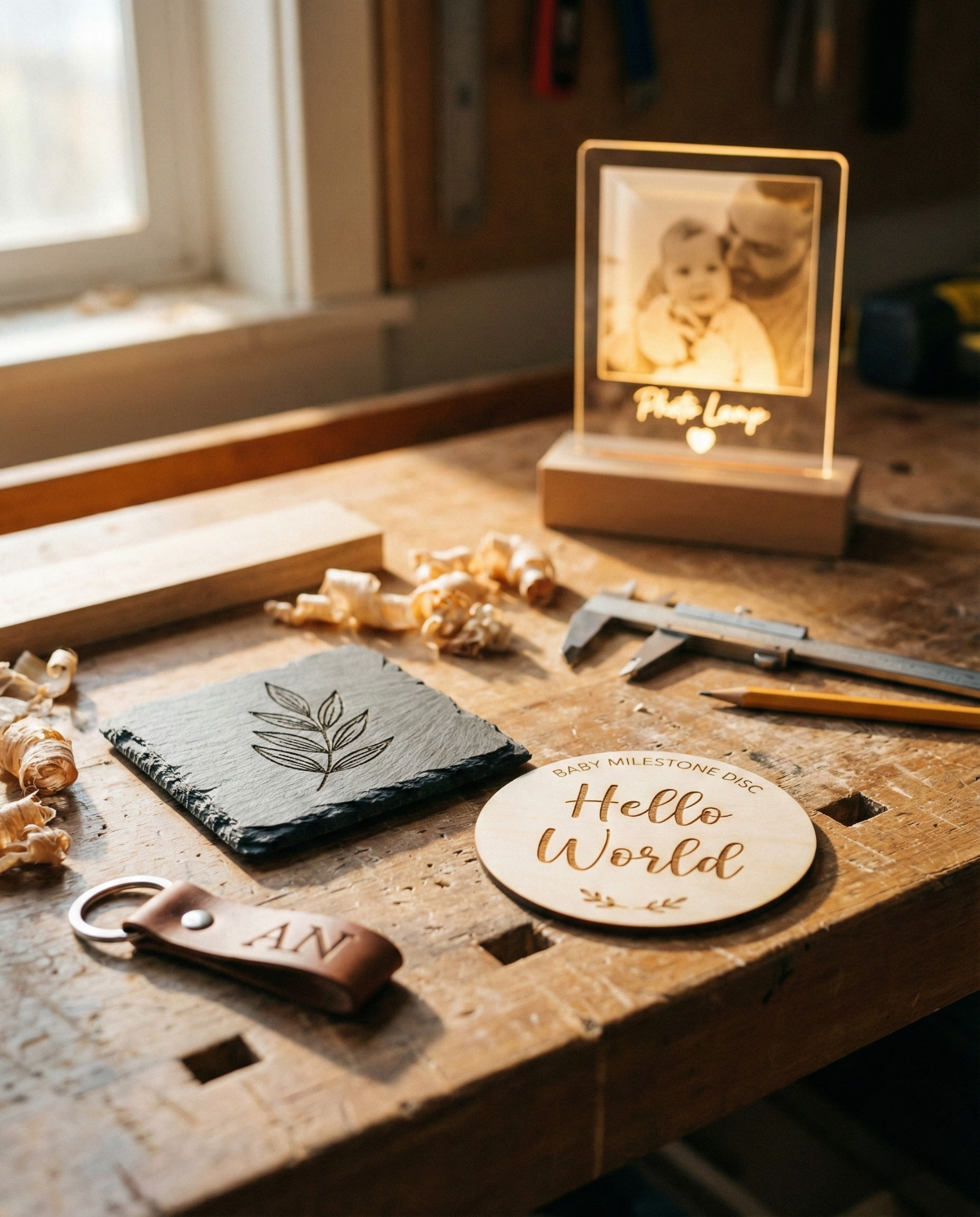
Neither wood nor acrylic is universally better for a personalised gift. Wood is the stronger choice when the gift should feel warm, natural and tactile; acrylic is usually better when the design should look clean, modern, transparent, colourful or reflective. The right decision depends on where the gift will be displayed, how it will be handled and which visual style suits the recipient. Products such as the Nursery Name Sign, Personalised Cake Topper and Personalised Wedding Table Numbers make this choice practical by offering different wood and acrylic finishes for the same type of personalised piece.
Start with the intended result rather than assuming that one material is automatically more premium. A natural wood grain can make a name, date or message feel softer and more organic. Clear, black, white or mirror acrylic can create transparency, sharper contrast or a more formal event finish. This guide explains what changes when you choose one material over the other and how to match that choice to the recipient, room and occasion.
Wood or Acrylic: Which Material Is Better?
Choose wood for warmth, visible grain and a natural appearance. Choose acrylic for visual consistency, clean colour, transparency or a reflective finish. For many personalised gifts, the material is not only a technical specification; it changes the entire character of the finished design.
- Wood is usually best for: warm interiors, nursery decor, keepsake boxes, rustic or botanical celebrations and gifts that should feel natural and tactile.
- Clear acrylic is usually best for: illuminated designs, transparent signage, modern table decor and gifts that should appear visually light.
- White or black acrylic is usually best for: clean contrast, graphic lettering and styling that needs a precise, consistent colour.
- Gold mirror acrylic is usually best for: weddings, anniversaries, milestone birthdays and decorative pieces that should catch the surrounding light.
The best material is therefore the one that supports the purpose of the personalisation. A recipient who prefers warm, understated objects may value natural wood more than a glossy finish. A modern wedding or illuminated photo gift may need acrylic to achieve the intended visual effect.
Choose Wood When the Gift Should Feel Warm and Natural
Natural wood gives a personalised gift a softer and more organic presence. The grain remains visible, so every finished piece has small differences in tone and pattern. Those variations are part of the material rather than defects.
Wood works especially well when the personalised detail should feel connected to home, family, childhood or memory. A name cut from wood can blend naturally into a neutral nursery. A date engraved on a wooden box can feel more like a keepsake than a display sign. A wooden cake topper or table number can support botanical, rustic, boho or garden styling without looking overly formal.
Consider wood when:
- The recipient prefers neutral colours, natural textures or Scandinavian, boho and rustic interiors.
- The gift should feel tactile rather than glossy.
- Visible grain and small natural differences are desirable.
- The piece will be used as indoor decor or as a protected keepsake.
- The personalisation should feel understated rather than high-contrast or reflective.
The Personalised Baby Keepsake Box is a clear example of a gift where natural wood supports the purpose of the product. The box is intended to hold physical memories, and the grain gives the engraved name or date a warm, permanent setting.
Choose Acrylic When the Gift Should Look Clean, Modern or Reflective
Acrylic offers more control over colour and visual effect. Depending on the selected finish, it can be transparent, solid white, solid black or mirror-like. This makes acrylic particularly useful when the personalised design must coordinate with a room, event palette or lighting effect.
Clear acrylic can make a sign appear visually lighter because the background remains visible through the material. It is also the material used for AtaNova’s engraved lamp panels, where the personalised design becomes visible when illuminated from the wooden LED base. Black and white acrylic create consistent colour and strong graphic contrast. Gold mirror acrylic adds reflection and is suited to pieces intended to act as a decorative focal point.
Consider acrylic when:
- The design should look modern, minimal or visually precise.
- Transparency is part of the intended effect.
- A specific colour such as black or white must remain consistent.
- The piece should reflect light or coordinate with metallic event details.
- The design needs clear contrast in photographs or across a decorated venue.
Acrylic surfaces should be handled carefully and cleaned with a soft cloth. Abrasive products can mark the surface, and mirror finishes require particular care because their reflective appearance makes scratches more noticeable.
How Each Acrylic Finish Changes the Result
“Acrylic” is not one single look. The finish matters as much as the material category.
Clear Acrylic
Clear acrylic is transparent and visually light. It suits illuminated lamps, modern table signs and designs that should not block the background. On a personalised lamp, the engraved lines and text catch the light while the rest of the panel remains clear.
White Acrylic
White acrylic creates a clean, bright and consistent appearance. It works well against darker, colourful or highly decorated backgrounds and is often suitable for baptisms, First Communion, birthdays and minimalist wedding styling.
Black Acrylic
Black acrylic gives lettering and silhouettes a strong graphic outline. It is effective in monochrome interiors, contemporary venues and evening celebrations where a pale or transparent material might not provide enough contrast.
Gold Mirror Acrylic
Gold mirror acrylic reflects the surrounding light and colours. It can make a personalised piece feel more formal or celebratory, particularly for weddings, engagements, anniversaries and milestone birthdays. Because the finish is visually prominent, it works best when other gold details are already present or when the personalised item is intended to be a focal point.
How the Material Changes the Personalisation
The same name or date can communicate something different depending on the surface that carries it. Material affects contrast, texture, visibility and how the object relates to its surroundings.
- On natural wood: engraving and cut shapes feel integrated with the grain. The result is warm and tactile, with small variations from one piece to another.
- On clear acrylic: the personalised lines appear to float within or across a transparent panel, especially when the edges or engraving are illuminated.
- On white or black acrylic: the design becomes more graphic because the colour is consistent across the entire piece.
- On mirror acrylic: the personalised shape or wording also reflects its environment, so lighting and nearby colours become part of the final appearance.
This is why the material should be chosen before the design is approved. The wording may remain the same, but spacing, contrast and surrounding decor can change which version works best.
Which Material Is Best for a Personalised Lamp?
For an illuminated personalised lamp, clear acrylic is the functional display material because it carries the laser-engraved design and allows the engraved details to catch the light. AtaNova lamps pair that clear acrylic panel with a solid wood LED base, combining the precision and transparency of acrylic with the warmth of wood.
This mixed-material construction is a useful reminder that the choice does not always need to be wood versus acrylic. Sometimes the strongest product uses each material for a different purpose. Explore the personalised lamps collection or compare photo, star-map, birth-detail and name-based formats in Personalised Lamps Explained.
Which Material Is Best for Nursery and Children’s Room Decor?
Natural wood is usually the safest visual choice for a warm, neutral or nature-inspired nursery. It works well with beige, cream, muted green, terracotta and other soft colour palettes. The visible grain also keeps a large name sign from feeling too flat or graphic.
Black acrylic is a stronger option when the room uses clear contrast, modern furniture or monochrome details. Gold mirror acrylic is more decorative and works best when metallic accents are already part of the room. The Nursery Name Sign is available in Natural Wood, Black Acrylic and Gold Mirror Acrylic, so the decision can be based on the room rather than on the product format alone.
Whichever material is chosen, a nursery wall sign is decorative indoor wall art rather than a toy. It should be mounted securely and kept out of reach of babies and small children.
Which Material Is Best for Weddings and Celebrations?
The venue and event styling should lead the decision.
- Natural wood: suitable for garden, barn, botanical, rustic and softer romantic themes.
- Clear acrylic: suitable for modern, minimal and visually light tables where flowers, linens or the venue should remain visible behind the sign.
- Black acrylic: suitable for contemporary, monochrome and evening-event styling.
- Gold mirror acrylic: suitable for formal, glamorous, art-deco and black-and-gold celebrations.
- White acrylic: suitable for clean, bright cakes and event pieces where a neutral solid colour is needed.
The Personalised Wedding Table Numbers offer natural wood, clear acrylic, black acrylic and gold mirror acrylic. The Personalised Cake Topper offers natural wood, white acrylic, black acrylic and gold mirror acrylic. Using the same material or repeating one finish across several details can make the event feel coordinated without requiring every item to be identical. Browse the Wedding & Events collection for additional matching formats.
Which Material Is More Premium?
Premium is not a material label. It comes from whether the material suits the design, whether the personalisation is balanced and whether the finished piece is appropriate for its setting.
Natural wood can feel premium because of its grain, warmth and individual variation. Clear acrylic can feel premium because it creates a precise, light and modern result. Gold mirror acrylic can feel premium because it reflects light and adds visual impact. Any material can feel wrong when it conflicts with the recipient’s taste or the environment in which the gift will be used.
A better question is: which material makes this particular design look intentional? That approach is also central to choosing the right personalised product. The broader personalised gift selection guide explains how to begin with the recipient and the meaning before choosing the format.
Which Material Is Easier to Care For?
Both materials are suitable for indoor personalised gifts, but they require slightly different care.
Care for Natural Wood
- Dust gently with a soft, dry cloth.
- Keep untreated wood away from prolonged moisture, damp rooms and direct heat.
- Do not use abrasive cleaners or soak the surface.
- Expect small differences in grain and tone between pieces.
Care for Acrylic
- Use a clean, soft cloth to remove dust and fingerprints.
- Avoid abrasive sponges, harsh chemicals and rough paper products.
- Handle mirror acrylic carefully because fine marks are more visible on a reflective surface.
- Keep decorative pieces away from excessive heat and unstable placement.
For event pieces, care also includes transport and setup. Keep protective packaging until the venue is ready, and place freestanding signs on stable surfaces away from strong wind, rain or direct heat.
Is Wood Automatically the More Sustainable Choice?
No material should be described as automatically sustainable without considering its source, production, intended lifespan and end use. Wood is natural, but species, sourcing, finishes and waste all matter. Acrylic is a manufactured material, but a personalised acrylic piece may still be kept and reused for years rather than treated as disposable decor.
For a buyer, the most responsible choice is often the material that genuinely fits the purpose and will remain useful or meaningful. Choosing a durable format, using only the personal details that matter and avoiding a design that will be discarded after one photograph can be more important than selecting a material based on a broad label.
How to Choose Between Wood and Acrylic in Five Questions
- Where will the gift be used? A nursery, shelf or keepsake space may suit wood; a modern venue, illuminated base or transparent display may require acrylic.
- What should the material communicate? Choose wood for warmth and natural character, clear acrylic for visual lightness, solid acrylic for contrast and mirror acrylic for celebration.
- Does the recipient accept natural variation? Wood grain and tone vary. Acrylic provides a more consistent colour and surface appearance.
- How will the piece be handled? A protected keepsake and an event sign have different care needs. Fine cut details, reflective surfaces and untreated wood all require thoughtful handling.
- Does the material support the personalised detail? The name, date, photograph or message should remain easy to read and visually appropriate in the final setting.
Review the Material in the Design Proof
When a Design Proof is provided, use it to check the layout, spelling, spacing and balance of the personalisation. The proof helps confirm how the design will be arranged, but a digital preview cannot reproduce every physical characteristic. Natural grain varies, clear acrylic interacts with the background, and mirror acrylic reflects the room around it.
Review the selected material on the order as carefully as the name or date. Production begins after approval where a proof is required, so the material choice should be settled before the design moves forward. Standard made-to-order products are prepared in 1–2 business days, with that production period included within the overall 3–5 business day delivery promise from the order date. AtaNova’s ordering and approval process is explained on the How It Works page.
Final Recommendation
Choose natural wood when you want warmth, texture, visible grain and an understated personalised finish. Choose clear acrylic when transparency, illumination or a visually light display matters. Choose white or black acrylic for consistent colour and strong contrast. Choose gold mirror acrylic when the piece should reflect light and act as a celebration detail.
The most successful personalised gift is not the one made from the material that sounds most expensive. It is the one in which the material, personal detail and intended setting support the same idea.
Frequently Asked Questions
Is wood or acrylic better for a personalised gift?
Neither is universally better. Wood is ideal for a warm, natural and tactile appearance, while acrylic is better for transparency, consistent colour, strong contrast or reflective finishes. Choose according to the recipient, setting and purpose of the gift.
Which material looks more premium?
Both can look premium when they suit the design. Natural wood offers grain and warmth, clear acrylic creates a precise modern effect, and gold mirror acrylic adds a reflective celebration finish. The correct match matters more than the material name.
Which material is best for a nursery name sign?
Natural wood works well in neutral, Scandinavian, boho and nature-inspired nurseries. Black acrylic suits modern or monochrome rooms, while gold mirror acrylic is more decorative and works best with existing metallic accents.
Which material is best for wedding decor?
Natural wood suits rustic, botanical and garden weddings. Clear acrylic suits modern and minimal styling, black acrylic creates bold contrast, and gold mirror acrylic suits formal or glamorous celebrations.
Does natural wood always look identical?
No. Grain pattern, tone and small natural markings vary from piece to piece. These differences are normal characteristics of real wood and make each finished item slightly individual.
Can acrylic be personalised with laser engraving?
Yes. Suitable acrylic can be laser-engraved or laser-cut depending on the product design. Clear acrylic is used for AtaNova lamp panels, while solid and mirror acrylic options are used for selected signs, table numbers and cake toppers.
Why do personalised lamps use both wood and acrylic?
The clear acrylic panel carries the engraved personalised design and catches the light, while the solid wood base supports the panel and houses the USB-powered LED light. Each material performs a different function.
How should I care for wood and acrylic personalised gifts?
Dust both with a soft cloth. Keep untreated wood away from moisture and avoid soaking it. Clean acrylic gently without abrasive sponges or harsh chemicals, and handle mirror acrylic carefully to reduce visible surface marks.