Laser Engraving vs Printing for Personalised Gifts
Laser engraving creates a mark by removing or permanently changing part of a material’s surface, while printing adds ink, toner, dye or another coloured layer onto that surface. Engraving is usually the stronger choice for names, dates, line art and lasting detail on wood or acrylic. Printing is usually better when the design depends on full colour, gradients or photographic realism.
Neither method is automatically superior. The right choice depends on what the design must communicate, which material is being personalised and how the finished gift will be used.
What Is the Main Difference Between Laser Engraving and Printing?
The essential difference is where the personalisation sits.
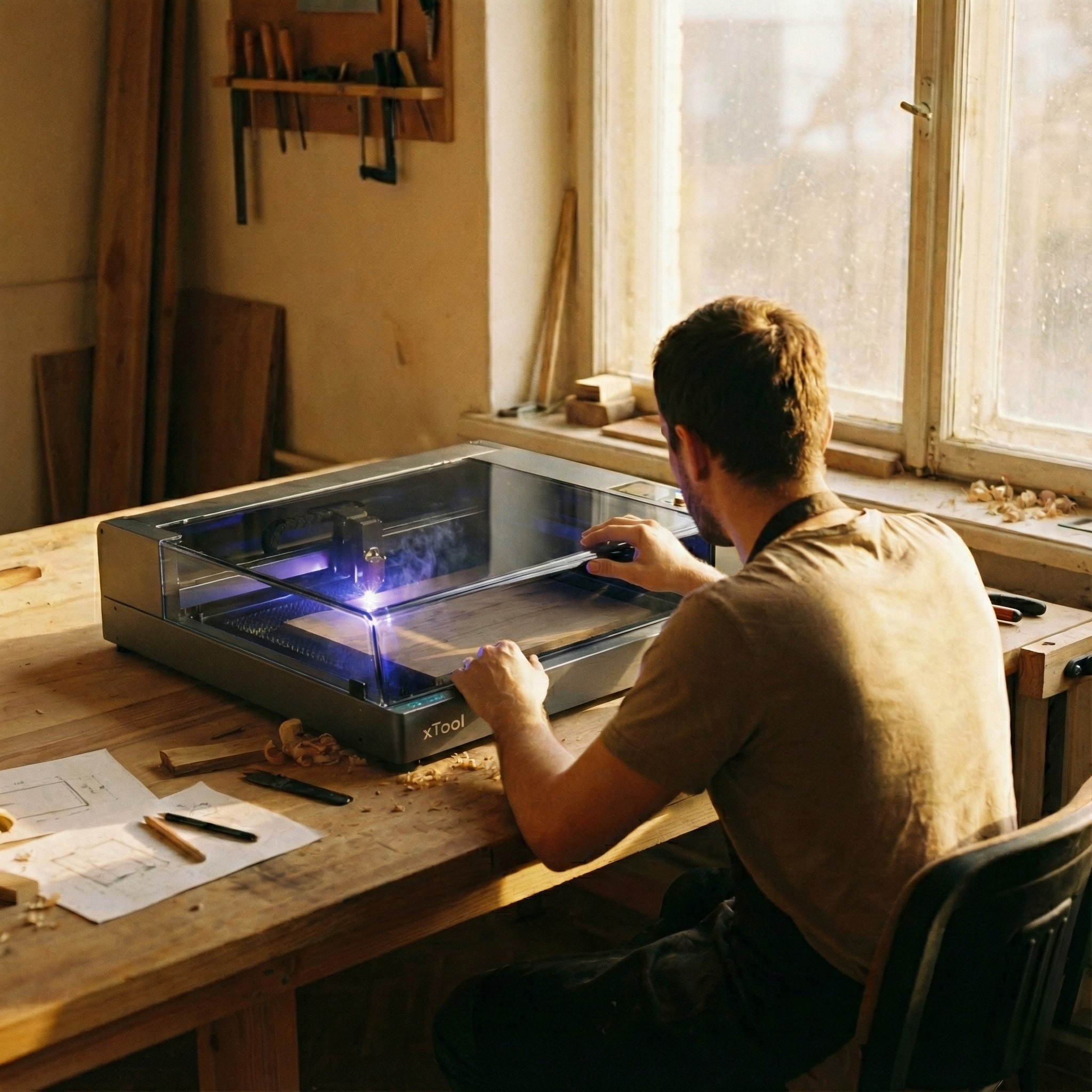
With laser engraving, a focused laser interacts directly with the material. Depending on the material and settings, it can remove a very thin layer, create a recessed mark, alter the surface colour or produce a frosted effect. The result becomes part of the object rather than a separate printed layer placed on top.
With printing, colour is applied to the surface. The exact process may involve UV-cured ink, sublimation dye, screen printing, toner, direct-to-object printing or a transfer film. These processes are not identical, but they share one broad advantage: they can reproduce colour more freely than standard laser engraving.
This distinction affects the appearance, tactile feel, colour range, production requirements and long-term behaviour of the finished gift.
Laser Engraving vs Printing: Quick Comparison
| Decision point | Laser engraving | Printing |
|---|---|---|
| How the design is created | The laser marks or removes part of the material surface. | Ink, dye, toner or a transfer is applied to the surface. |
| Best visual style | Names, dates, line art, logos, symbols and high-contrast detail. | Full-colour artwork, gradients, illustrations and photographic images. |
| Colour | Usually determined by the material and the laser reaction rather than added ink. | Can reproduce one colour, multiple colours or a full photographic palette. |
| Surface feel | May be recessed, frosted, darkened or lightly textured. | Usually remains on or very close to the surface, depending on the process. |
| Natural material character | Often preserves the visible grain, tone and identity of wood. | Can partially or fully cover the original surface with colour. |
| Design preparation | Works best with clean vectors, readable text and simplified line detail. | Can use complex colour artwork and high-resolution raster images. |
| Typical gift applications | Wooden keepsakes, acrylic lamps, bookmarks, boxes, signs and engraved event pieces. | Photo panels, mugs, textiles, promotional products, colourful signs and illustrated gifts. |
The table describes the general difference, but the final quality still depends on the machine, material, preparation, settings, ink system and finishing process used by the maker.
When Is Laser Engraving Better for a Personalised Gift?
Laser engraving is usually the better option when the gift should feel material-led, precise and permanent rather than colour-led.
1. When the personalisation is a name, date or short message
Text is one of the strongest uses for engraving. A name on a wooden keepsake box, initials on a bookmark or a wedding date on an acrylic sign can be reproduced with clean edges and consistent spacing.
Because the mark is created directly in the surface, the personalisation does not look like a label added after the object was made.
2. When the design uses line art
Line-art portraits translate photographs into a controlled set of outlines and selected details. This makes them suitable for laser engraving because the design does not depend on skin tones, background colour or photographic shading.
The photograph still matters, but it is used as the source for a new engraved composition rather than reproduced as a conventional colour print.
3. When the material should remain visible
Natural wood has grain, tone variation and small differences from piece to piece. Engraving works with those characteristics instead of covering them. The contrast can vary slightly because the material itself is not visually identical across every item.
This variation is not the same as a printing error. It is part of using a natural surface.
4. When clear acrylic will be illuminated
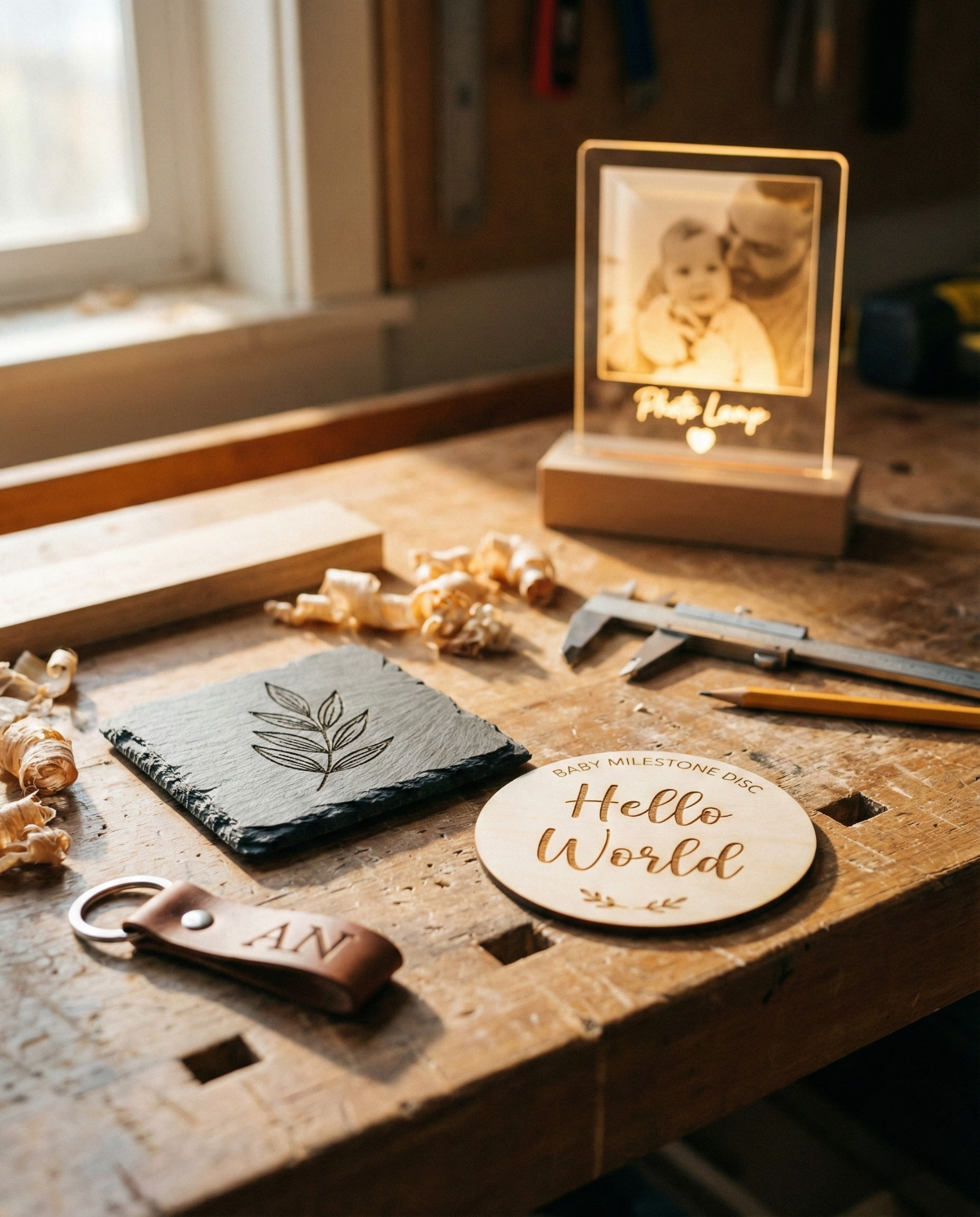
Laser engraving can create a frosted line or surface on clear acrylic. When the panel is placed in an LED base, the engraved detail catches the light and becomes visible while the surrounding acrylic remains largely transparent.
This is why engraving is particularly suitable for personalised photo, star map, birth-details and name lamps. AtaNova’s personalised lamp collection uses this relationship between engraved acrylic and light.
5. When understated personalisation is more appropriate than bright colour
Not every meaningful gift needs a large colour image. Engraved text or line work can feel quieter and more integrated, especially on wooden keepsakes, reading accessories and event details.
When Is Printing Better for a Personalised Gift?
Printing is usually the better choice when colour is essential to the meaning of the design.
1. When the exact colours matter
A company logo, illustrated character, wedding colour palette or child’s artwork may lose its identity if reduced to one engraved tone. Printing can preserve the colour relationships that make the original recognisable.
2. When the customer wants a realistic colour photograph
Laser engraving can interpret a photograph through lines, dots, contrast or shading, but it does not reproduce a conventional full-colour photo on wood or clear acrylic. Printing is more suitable when the goal is to retain skin tones, clothing colours, scenery and photographic depth.
3. When gradients and soft transitions are central to the artwork
Watercolour effects, painted backgrounds, detailed illustrations and tonal gradients are normally better suited to a printing process. Engraving can simulate some tonal variation, but the visual language remains different.
4. When the design intentionally covers the surface
Some gifts are designed around a bold printed image rather than the natural appearance of the base material. In that case, a print can create the intended visual impact more effectively than a subtle engraved mark.
Is Laser Engraving More Durable Than Printing?
Laser engraving is often highly durable because the design is created in the material rather than placed on top as a separate sticker or ordinary surface layer. However, it is not accurate to say that every engraving will always outlast every print.
Print durability depends on the printing system, ink chemistry, surface preparation, curing, coating and intended use. A professionally prepared UV print can perform very differently from a low-quality transfer or adhesive decal.
Engraved items also require appropriate care. Wood can stain, swell or change colour if exposed to water or strong sunlight. Acrylic can scratch. A deep impact can damage both the object and the engraved area.
The better question is therefore: Which technique is correctly matched to the material and use of this specific gift?
How Does the Material Affect Engraving and Printing?
Natural wood
Laser engraving can darken or recess the wood and leave the grain visible. The exact contrast may vary with species, grain direction, resin content and natural tone. This makes each finished piece slightly individual.
Printing can add colour to wood, but the appearance depends on whether the grain remains visible, whether a white underbase is used and how well the ink adheres to the prepared surface.
For a small text-led gift, an engraved item such as the Personalised Wooden Bookmarks Set keeps the material itself central to the design.
Clear acrylic
Engraving produces a frosted or illuminated detail rather than a full-colour image. This is especially useful for LED lamps and transparent signs.
Direct printing can add opaque or translucent colour to acrylic, including white ink beneath colour artwork. The result is visually different because the colour sits on the acrylic surface instead of appearing as light-catching engraved detail.
Coloured or mirror acrylic
The engraved result depends on the acrylic construction and coating. Some materials reveal a contrasting layer; others create a subtle etched mark. Laser cutting can also shape the acrylic outline, which is a separate operation from engraving.
Coated metals, glass, ceramics and textiles
These materials may support engraving, printing or both, but the correct process varies significantly. For example, some metal products are laser marked rather than deeply engraved, while textiles are commonly printed, embroidered or transferred. The material specification should always be checked before production.
Laser Engraving Is Not the Same as Laser Cutting
Laser engraving marks the surface. Laser cutting travels through the material to create the outer shape or internal cut-outs.
A personalised product can use one process or both. A wooden bookmark may be cut to shape and engraved with text. A cake topper may be cut around connected lettering. An acrylic sign may be cut to its final outline and then engraved with names or details.
This distinction matters when comparing products. A clean laser-cut edge does not automatically mean that the visible personalisation has also been engraved.
What Does “Permanent” Mean for a Personalised Gift?
In product descriptions, “permanent” should not be interpreted as indestructible. It normally means that the design is not intended to peel away like a removable sticker or be washed off like an unsuitable surface coating.
The object still needs care appropriate to its material. An engraved wooden box should be kept dry. An acrylic panel should be cleaned with a soft cloth rather than an abrasive cleaner. A printed product should follow the maker’s instructions for washing, heat and chemical exposure.
A well-made gift combines the correct technique with realistic care guidance.
How Design Proofs Reduce Personalisation Errors
The production method does not protect against a spelling mistake, incorrect date or poorly balanced layout. That is why a digital Design Proof can be more important than the difference between engraving and printing.
A proof allows the customer to review:
- Names, dates and short messages
- Capitalisation and punctuation
- Line breaks and text hierarchy
- Photo crop or line-art composition
- Spacing and alignment
- The relationship between the design and the product shape
At AtaNova, products that require a Design Proof are prepared for engraving only after the layout has been reviewed and approved. The full process is explained on the How It Works page.
How to Choose Between Laser Engraving and Printing
Use the following questions before ordering a personalised gift:
- Does the design need full colour? Choose printing when colour is essential. Choose engraving when the design can work through line, contrast and material.
- Should the original material remain visible? Engraving is often better when wood grain or transparent acrylic is part of the intended look.
- Is the source a photograph? Choose printing for a realistic colour photo. Choose line-art engraving for a simplified portrait or memory interpreted through outlines.
- Is the personalisation mainly text? Names, dates, coordinates and short messages are strong candidates for engraving.
- How will the item be used? Consider moisture, sunlight, abrasion, washing, heat and repeated handling.
- Has the maker explained the exact process? Look for clear material information, technique, dimensions, proofing and care instructions rather than vague claims.
Which Technique Does AtaNova Use?
AtaNova uses laser engraving and laser cutting across many made-to-order wood and acrylic products. The exact technique depends on the product.
- Personalised wooden bookmarks are laser-engraved directly into natural birch plywood.
- The Personalised Baby Keepsake Box carries laser-engraved personalisation on its wooden lid.
- Personalised lamps use laser-engraved clear acrylic so the design becomes visible when illuminated from the wooden LED base.
- Selected event products combine laser-cut shapes with engraved names, numbers or short wording.
AtaNova does not present engraving as a universal replacement for colour printing. It is used where the material, design and intended result benefit from direct laser personalisation.
Final Answer: Engraving or Printing?
Choose laser engraving when you want the personalisation to feel integrated into wood or acrylic, especially for names, dates, line art, symbols and illuminated detail.
Choose printing when the gift depends on full colour, gradients, detailed illustration or a realistic photographic image.
The best personalised gift is not defined by the most advanced-sounding technique. It is defined by whether the production method supports the memory, message, material and everyday use of the finished piece.
For broader help matching a person, occasion and type of personalisation, read Personalised Gifts: How to Choose a Gift Made for One Person.
Frequently Asked Questions
Is laser engraving more durable than printing?
Laser engraving is often very durable because the mark is created in the material rather than added as a removable surface layer. However, print durability varies by ink, preparation, curing and use, so a professional print may also be long-lasting.
Can laser engraving reproduce a full-colour photograph?
No. Standard laser engraving does not reproduce a conventional full-colour photograph. It can interpret a photo through line art, dots, shading or contrast, while printing is better for retaining realistic colour.
Does laser engraving work on both wood and acrylic?
Yes, suitable wood and acrylic can be laser engraved, but they produce different results. Wood may darken or become recessed, while clear acrylic usually develops a frosted mark that can catch light.
Is laser engraving the same as laser cutting?
No. Engraving marks the surface, while cutting passes through the material to create a shape or opening. A personalised product may use either process or both.
Why can engraving look different on two wooden gifts?
Natural wood varies in grain, tone, density and resin content. Those differences can change the contrast and texture of the engraved mark, making each item slightly individual.
Should I choose engraving or printing for a photo gift?
Choose printing when you want a realistic colour photograph. Choose engraving when you prefer a simplified line-art or high-contrast interpretation that becomes part of the material.
Can printed personalisation peel or fade?
Some printed layers can peel, scratch or fade if the process is poorly matched to the surface or exposed to unsuitable cleaning, heat or sunlight. Performance depends on the printing system, preparation and care instructions.