A nursery name sign should be chosen by matching the available wall space, the visual impact you want and the material already used in the room. AtaNova’s personalised Nursery Name Sign is a laser-cut indoor wall decoration made to order in an Antwerp atelier. It is available in approximate widths of 30 cm, 45 cm and 60 cm, with Natural Wood, Black Acrylic or Gold Mirror Acrylic as the active material options. You add one name or short word, receive a digital Design Proof by email and approve the layout before production begins.
This buying guide explains how to choose the right size and material, measure the intended wall area, prepare the personalisation correctly and decide whether a standalone name sign is the best fit for the room. You can also explore the complete AtaNova Baby & Kids collection for coordinated nursery decor, personalised lights and keepsakes.
Quick Answer: Which Nursery Name Sign Should You Choose?
- Choose 30 cm for a bedroom door, compact nursery corner, shelf area or smaller section of wall.
- Choose 45 cm for a balanced middle size that suits many standard nursery and children’s bedroom walls.
- Choose 60 cm for a larger wall, a longer name or a more prominent personalised focal point.
- Choose Natural Wood for a warm, neutral or nature-inspired room.
- Choose Black Acrylic for strong contrast and a clean, modern outline.
- Choose Gold Mirror Acrylic for a more reflective and decorative finish.
The selected measurement is the approximate width of the finished sign. Its height changes naturally according to the name, number of characters and letter shapes.
What Is a Nursery Name Sign?
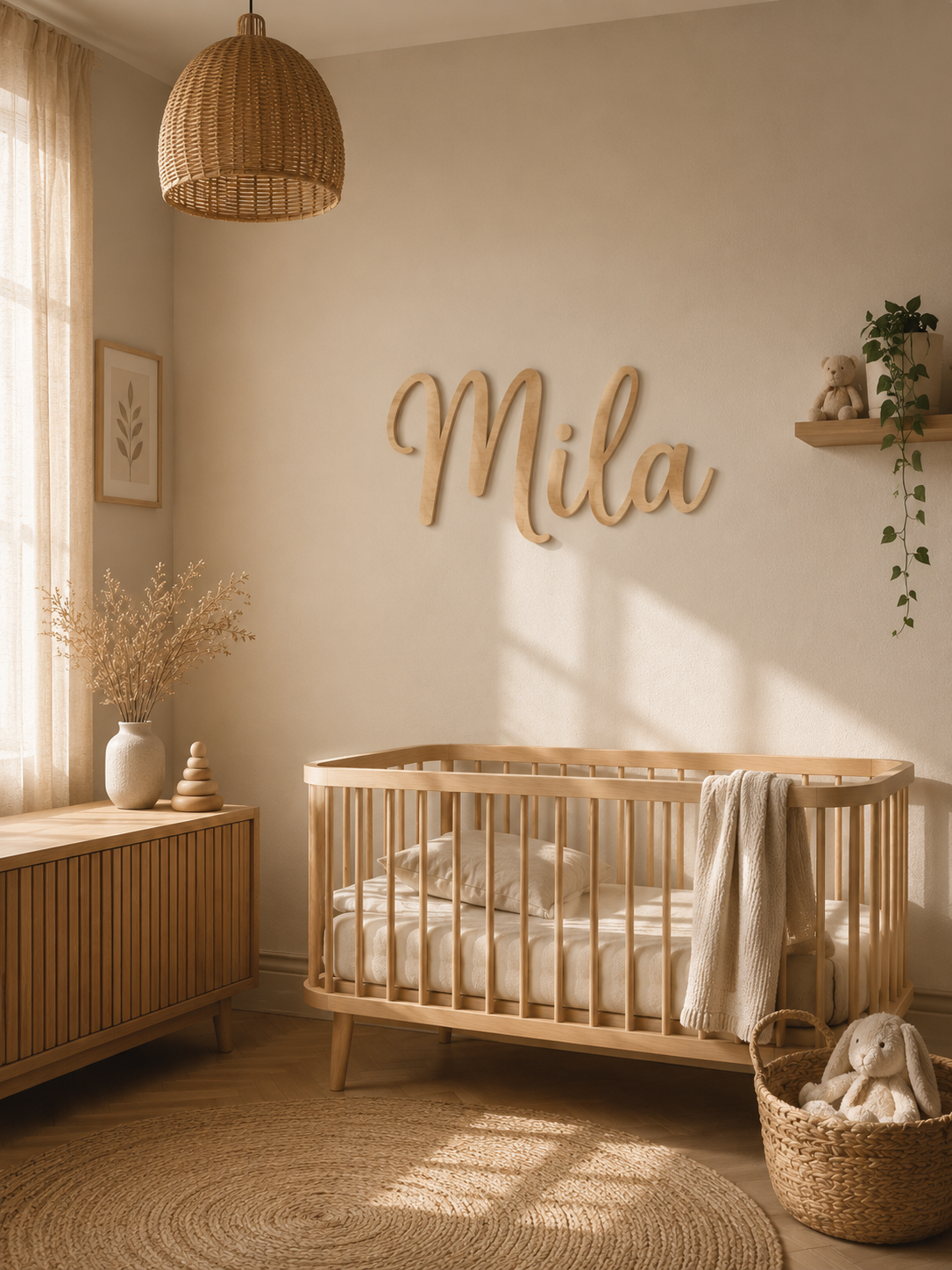
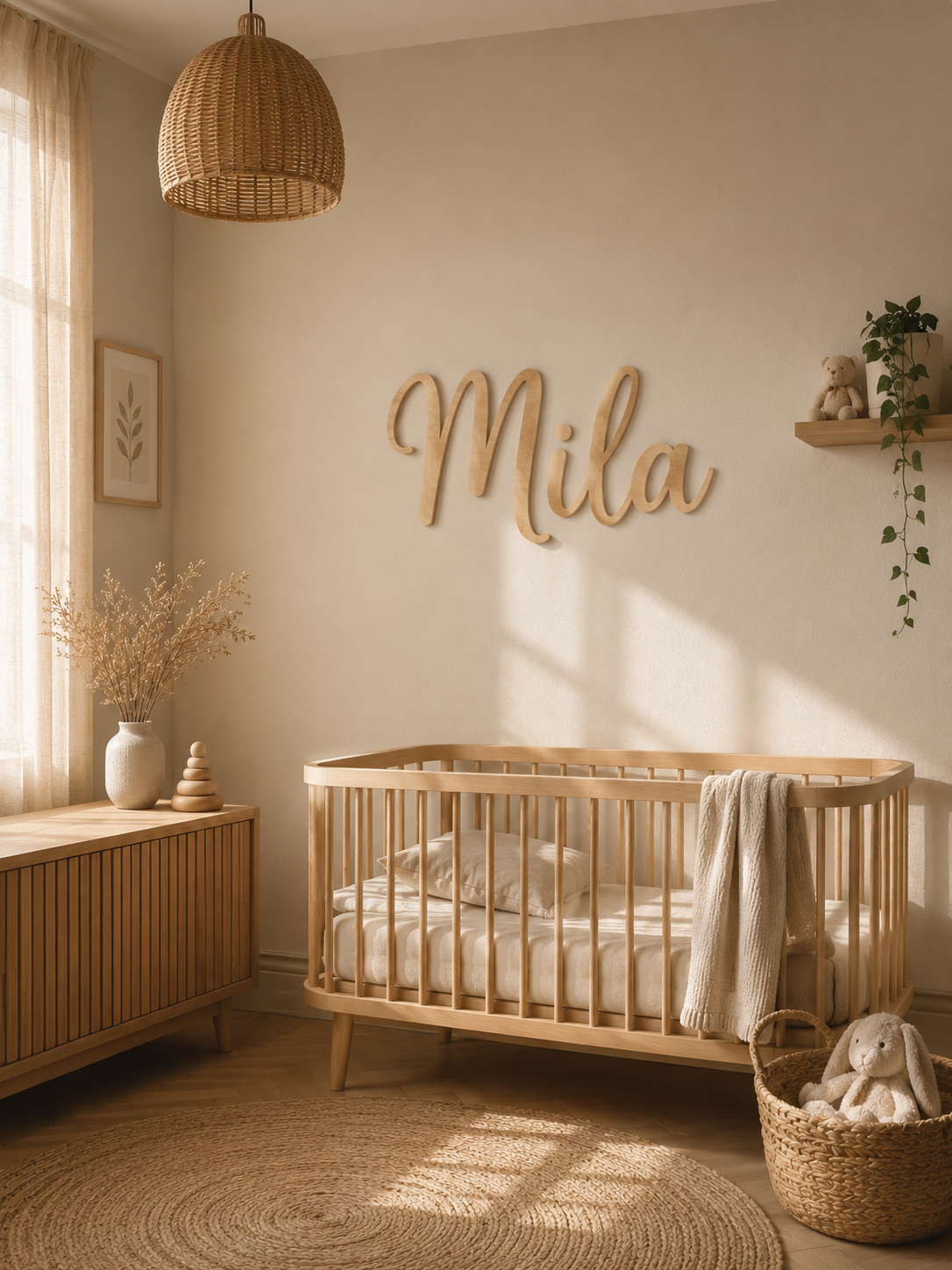
A nursery name sign is personalised wall decor formed around a child’s name or a short word. Unlike a printed poster or wall sticker, the AtaNova sign is precision laser-cut so the lettering itself becomes the decoration and the wall remains visible around it.
The product is designed for indoor decorative use in a nursery, baby room or children’s bedroom. It can be used as the main feature on a clear wall, as part of a gallery arrangement or as a smaller personalised detail on a bedroom door.
View the active sizes, materials and personalisation field on the Nursery Name Sign product page.
How to Choose the Right Nursery Name Sign Size
The best size depends on three practical questions: how much clear wall space is available, how visually prominent the name should be and how long the name or word is.
30 cm: Best for Compact Areas
The 30 cm option works well where the sign should remain a smaller personalised detail rather than dominate the room. Consider it for a bedroom door, a narrow wall section, a reading corner or a compact area near nursery furniture.
45 cm: The Balanced Middle Size
The 45 cm option provides more presence while remaining easy to place in many room layouts. It is a practical choice for a standard nursery wall when you want the child’s name to be clearly visible without making it the only decorative feature.
60 cm: Best for a Main Wall Feature
The 60 cm option is suited to a larger wall, a longer name or a room where the sign should become the main personalised element. Before ordering, confirm that the full width fits comfortably and that there is enough empty space around the sign for a balanced result.
How to Measure the Wall Before Ordering
- Choose the exact wall or door where the sign will be placed.
- Check the clear width between furniture, shelves, frames and corners.
- Mark 30 cm, 45 cm or 60 cm lightly with removable tape or paper.
- Step back and view the marked area from the main entrance to the room.
- Leave enough open space around the measurement so the name does not look crowded.
- Confirm that the chosen location keeps the finished decoration securely mounted and out of reach of babies and small children.
Remember that the product size refers to approximate width. The final height is proportioned around the submitted name or short word.
How to Choose Between Natural Wood and Acrylic
Material changes the contrast, warmth and visual weight of the finished name sign. The correct choice is usually the one that works with the wall colour and the room’s existing finishes.
Natural Wood
Natural Wood creates a warm and understated appearance. It works naturally with neutral colours, Scandinavian interiors, soft textiles and other nature-inspired materials. Grain and tone may vary slightly because wood is a natural material.
Black Acrylic
Black Acrylic gives the letters a strong, clean outline. It is particularly effective against a light wall and suits modern, monochrome or higher-contrast room designs.
Gold Mirror Acrylic
Gold Mirror Acrylic creates a more reflective and decorative effect. It suits rooms with warm neutral colours, gold details or a more noticeable personalised focal point.
How Wall Colour Affects the Result
Contrast determines how clearly the name can be seen from across the room. Natural Wood is more subtle on warm beige or wood-toned backgrounds, while Black Acrylic creates stronger separation on light walls. Gold Mirror Acrylic changes with surrounding light and reflections, so its appearance can vary during the day.
When choosing the material, compare it with the actual wall rather than only with furniture or online inspiration images.
What Can You Personalise?
You can add one name or short word. Enter the text exactly as it should appear, including capital letters, accents and special characters. The key ordering decisions are the text, width and material.
Shorter text generally allows larger, clearer letter forms within the selected width. A longer name may benefit from the 45 cm or 60 cm option when the wall space allows it.
Why the Design Proof Matters
After the order is placed, AtaNova prepares a digital layout and sends the Design Proof by email before production. This gives you the opportunity to check the spelling, accents, proportions and overall arrangement before the sign is laser-cut.
Review the proof promptly and carefully. Production starts after approval, and personalised details cannot normally be changed once the approved design has entered production. The complete process is explained on the How It Works page.
Where Can a Nursery Name Sign Be Placed?
- Feature wall: Use the name as the main personalised element in the room.
- Changing area: Add identity to a smaller section of the nursery.
- Gallery wall: Combine it with photographs or framed nursery artwork while keeping enough visual space around the lettering.
- Bedroom door: Use a compact size as a clear personalised room marker.
- Older child’s bedroom: Move the sign from the nursery into a later bedroom when the style still fits.
Mounting materials are not included because the correct fixing method depends on the wall type and selected material. The sign is indoor decorative wall art, not a toy. It should be mounted securely and kept out of reach of babies and small children.
Nursery Name Sign or Nursery Wall Art Set?
Choose the standalone Nursery Name Sign when the child’s name should be the central wall feature without additional shapes.
Choose the Moon, Cloud & Star Personalised Nursery Wall Set when you want a coordinated three-piece composition with the child’s name engraved on the cloud.
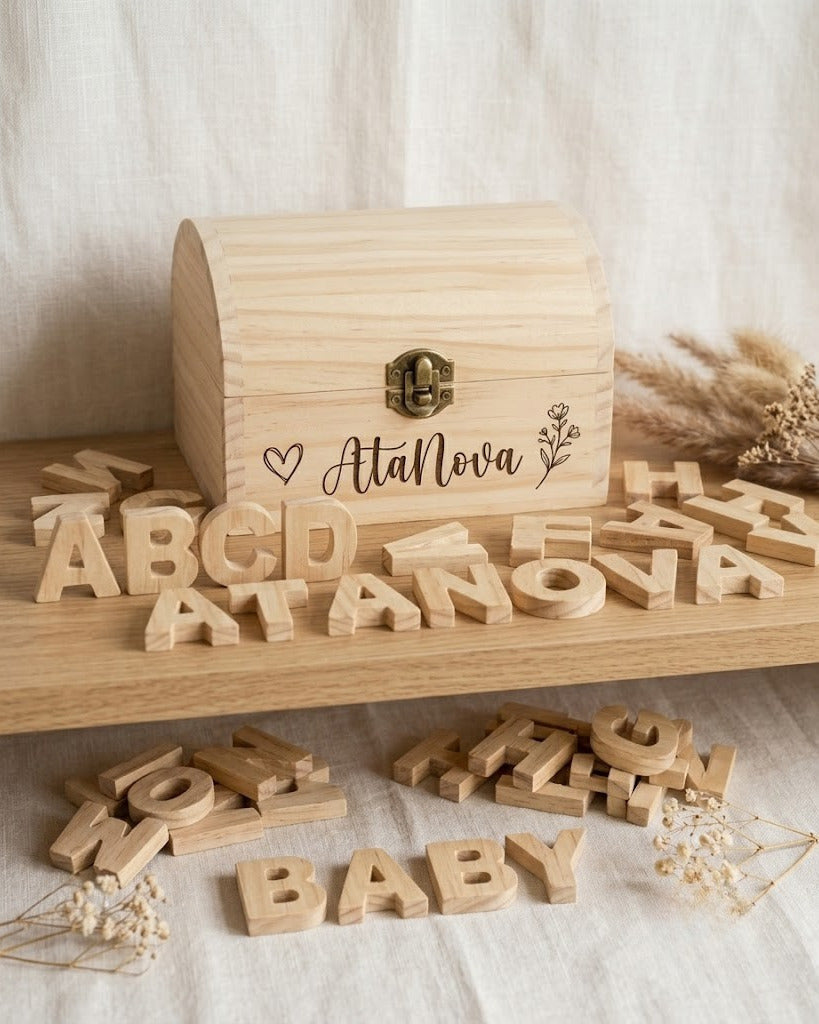
For a personalised light rather than wall decor, consider DreamLight™. For personalised storage of small first-year memories, consider the Baby Keepsake Box.
Is a Nursery Name Sign a Good Baby Gift?
A personalised name sign can suit a baby shower, newborn gift, naming celebration, first birthday or nursery-completion gift when the child’s name is confirmed. It is especially relevant for parents who are preparing a room and want one visible piece made specifically for their child.
Before ordering as a gift, confirm the exact spelling and accents. The recipient should also have a suitable indoor wall area and choose a mounting method appropriate for that surface.
Production and Delivery
Each Nursery Name Sign is made to order in AtaNova’s Antwerp atelier. Production takes 1–2 business days after Design Proof approval and is included within the overall delivery promise of 3–5 business days from the order date. The two periods are not added together.
The finished sign is carefully packed and shipped from Belgium with tracking.
When to Request a Custom Nursery Project
The standard Nursery Name Sign is available in approximate widths of 30 cm, 45 cm and 60 cm with Natural Wood, Black Acrylic or Gold Mirror Acrylic. For another size, a coordinated sibling design, a different concept or a project outside these standard options, use the Custom Projects & Bespoke Orders page.
Nursery Name Sign Buying Checklist
- Measure the intended wall area before choosing 30 cm, 45 cm or 60 cm.
- Decide whether the sign should be subtle, balanced or a main focal point.
- Compare Natural Wood, Black Acrylic and Gold Mirror Acrylic with the actual wall colour.
- Enter the name or short word exactly as required.
- Check capital letters, spelling, accents and special characters.
- Review and approve the Design Proof before production.
- Plan a secure mounting method suitable for the wall and selected material.
- Keep the decoration out of reach of babies and small children.
Once these points are clear, select the appropriate options on the AtaNova Nursery Name Sign page or continue browsing the Baby & Kids collection.
Frequently Asked Questions
What size Nursery Name Sign should I choose?
Choose 30 cm for compact spaces or a bedroom door, 45 cm for a balanced standard wall feature, and 60 cm for a larger wall, longer name or more prominent focal point.
Does the selected size refer to width or height?
The selected size refers to the approximate width. The height changes naturally according to the name, number of characters and letter shapes.
Which materials are available?
The active material options are Natural Wood, Black Acrylic and Gold Mirror Acrylic.
What can I personalise on the sign?
You can add one name or short word. Enter the text exactly as required, including capital letters, accents and special characters.
Will I receive a Design Proof?
Yes. AtaNova sends a digital Design Proof by email before production so you can check the spelling, proportions and overall layout.
Are mounting materials included?
No. Mounting materials are not included because the correct fixing method depends on the wall type and selected material.
How long do production and delivery take?
Production takes 1–2 business days after Design Proof approval and is included within the overall delivery promise of 3–5 business days from the order date.
Is the Nursery Name Sign a toy or suitable for outdoor use?
No. It is indoor decorative wall art, not a toy. Mount it securely, keep it out of reach of babies and small children, and keep it away from moisture and direct heat.
Can I request another size or a custom design?
Yes. Requests outside the standard sizes, materials or design options can be submitted through AtaNova’s Custom Projects & Bespoke Orders page.