Personalised Keepsake Box Buying Guide: How to Choose the Right Memory Box
A personalised keepsake box gives important but easily misplaced objects one permanent home. The best box is not simply the most decorative option. It should have enough room for the memories you intend to keep, a style that suits the recipient and personalisation that still feels relevant years from now.
For a new baby, this may mean preserving a hospital bracelet, first photographs, cards, a lock of hair or a favourite early keepsake. For an older child or family, it may hold drawings, letters, small milestone objects and other pieces connected to one stage of life.
This buying guide explains how to choose the right personalised keepsake box by purpose, dimensions, design, engraving and gift occasion.
What Is a Personalised Keepsake Box?
A personalised keepsake box is a storage box created for objects with emotional or historical value. Unlike general household storage, it is normally associated with one person, relationship, occasion or period of life.
The box may be personalised with a name, date, initials or short message. That detail identifies who the memories belong to and turns the box itself into part of the story.
A keepsake box is sometimes called a memory box, baby memory box, memento box or personalised wooden storage box. These terms overlap, but the central purpose is the same: protecting meaningful objects that might otherwise become scattered, damaged or forgotten.
A Keepsake Box Is for Curated Memories
The aim is not to store everything. A useful memory box holds a selected group of objects that represent an important period or relationship.
That distinction matters. When a box becomes a general container for unrelated items, its emotional purpose becomes less clear. When it holds a deliberate selection, opening it later feels like revisiting a chapter rather than clearing a cupboard.
How Do You Choose the Right Personalised Keepsake Box?
Choose a keepsake box by answering five questions in order:
- Whose memories will the box hold?
- Which stage, event or relationship should it represent?
- What types of objects will go inside?
- Which exterior style suits the recipient?
- Which personal detail should be engraved?
Starting with these questions prevents the most common buying mistake: choosing a box for its appearance before deciding what it needs to do.
1. Decide Who the Box Belongs To
A keepsake box for a newborn serves a different purpose from one created for a couple, a grandparent or an older child.
For a baby, the recipient is technically the child, but the parents will organise and protect the contents. The box therefore needs to suit both the family’s style and the type of objects collected during childhood.
For an older child, it can become their own place for certificates, small souvenirs, letters or treasured objects. For a family, a shared box may preserve photographs, cards or records connected to one event.
2. Define the Chapter It Should Preserve
Choose one clear purpose rather than trying to represent an entire lifetime from the beginning.
Possible themes include:
- newborn and first-year memories;
- baby shower or baptism keepsakes;
- early childhood drawings and milestones;
- birthday cards and small gifts;
- family letters and photographs;
- school memories;
- objects connected to a wedding, anniversary or other celebration.
A clear theme also makes personalisation easier because the name, date or message can be chosen around a specific story.
3. List the Objects Before Choosing the Box
Make a rough list of what you expect to store. This gives you a realistic idea of the capacity and internal shape required.
A box intended for photographs, a hospital bracelet and a few cards does not need the same capacity as one intended for a baby blanket, clothing or large albums.
A compact wooden box is normally best for small, selected keepsakes rather than bulky textiles or complete document folders.
Heart Box or Treasure Box: Which Style Should You Choose?
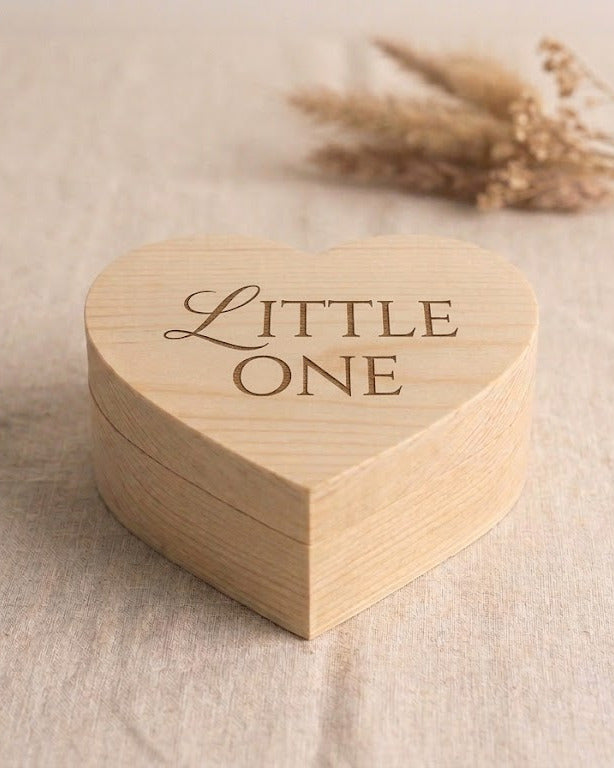
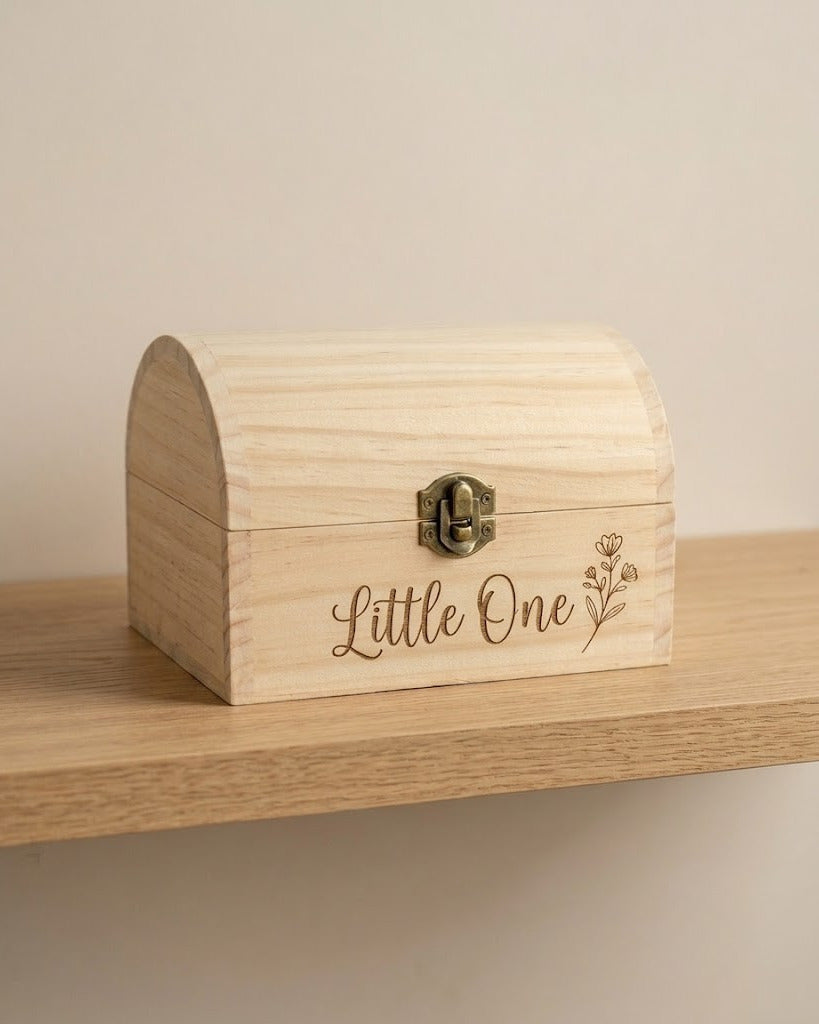
The AtaNova Personalised Baby Keepsake Box is available in two styles: Heart Box and Treasure Box. Both have the same core purpose, but the shape and visual character create a different impression.
Choose the Heart Box for a Softer, Sentimental Look
The Heart Box is the more expressive option. Its shape immediately signals affection, family connection and emotional value.
It is particularly suitable for:
- a newborn or baby shower gift;
- a baptism or naming celebration;
- a gift from parents or grandparents;
- first-year memories;
- a nursery with soft, romantic or traditional details.
Choose it when the emotional meaning of the gift should be visible before the box is opened.
Choose the Treasure Box for a Classic, Versatile Look
The Treasure Box has a more traditional storage-box character. It feels less tied to one age and can continue to look appropriate as the child grows.
It is a strong choice for:
- mixed childhood memories;
- letters, photographs and milestone objects;
- a neutral or minimalist nursery;
- a box intended to remain useful beyond the baby stage;
- buyers who prefer a classic keepsake chest.
The Practical Difference
The decision is primarily visual and emotional rather than functional. Choose the Heart Box when symbolism matters most. Choose the Treasure Box when versatility and a more timeless storage-box appearance matter most.
What Size Personalised Keepsake Box Do You Need?
The AtaNova Personalised Baby Keepsake Box measures approximately 18 × 12 × 12 cm. This makes it suitable for a curated collection of small baby and childhood keepsakes.
What Fits in an 18 × 12 × 12 cm Keepsake Box?
Depending on their individual size and how they are arranged, suitable items may include:
- a hospital identification bracelet;
- small printed photographs;
- ultrasound images folded or placed in a small envelope;
- a lock of hair in a protected pouch;
- a first tooth container;
- small birth or baptism cards;
- a pacifier or small name tag;
- short letters from parents or grandparents;
- small jewellery or symbolic objects;
- selected milestone souvenirs.
What Is It Not Designed For?
A compact keepsake box is not intended for large baby blankets, full-size clothing, thick photo albums, framed prints or extensive paperwork.
Buyers who want to store these larger items should choose a larger archival memory chest or separate the collection into two levels:
- a personalised wooden box for the most meaningful small objects;
- a larger neutral storage container for bulky textiles and documents.
This combination often works better than choosing one oversized box for everything.
Why Compact Size Can Be an Advantage
A defined capacity encourages selection. Instead of filling the box with every object from childhood, parents can preserve the few pieces that carry the strongest memory.
A compact box is also easier to place on a nursery shelf, in a wardrobe or inside a family storage cabinet.
What Should You Put on a Personalised Keepsake Box?
The most useful personalisation is clear, accurate and easy to understand years later. A name is usually the strongest starting point because it identifies ownership without limiting the box to one specific occasion.
Name Only
A name-only design is the most versatile option. It works well when the box may hold memories from several years rather than one single event.
Choose name-only engraving when:
- you want a clean, timeless design;
- the exact date is not yet known;
- the box is intended for long-term childhood memories;
- you are unsure which additional message the family would prefer.
Name and Birth Date
A name and birth date clearly establish the beginning of the collection. This is especially appropriate for newborn gifts and first-year memory boxes.
Check the spelling, date order and year carefully before submitting the details.
Name and Short Message
A short phrase can add emotional context, but the message should remain concise. Long wording may reduce visual clarity and make the box feel tied to one gift-giving moment rather than the person’s wider story.
Suitable directions include:
- a brief family phrase;
- a simple dedication;
- a short description such as “First Memories”;
- a meaningful date;
- initials or a family name.
Avoid Over-Personalising
More text does not automatically create more meaning. The lid should still look balanced and remain easy to read.
As a general rule, use one primary personal element and no more than one supporting detail:
- name;
- name plus date;
- name plus short phrase.
Why a Design Proof Matters
A digital Design Proof allows you to review the layout before engraving begins. Check:
- the exact spelling of the name;
- capitalisation;
- date format;
- word order;
- spacing and overall balance.
A proof is not only for catching spelling mistakes. It also confirms whether the information looks visually appropriate on the selected lid.
What Can You Store in a Baby Keepsake Box?
The most valuable contents are not necessarily expensive. They are the objects that would be difficult or impossible to replace later.
Birth and Hospital Memories
- hospital bracelet;
- birth announcement;
- first photograph;
- copy of birth details;
- small hospital name card;
- ultrasound image.
First-Year Keepsakes
- lock of hair;
- first tooth container;
- first birthday card;
- small milestone note;
- favourite pacifier;
- name tag from a meaningful event.
Letters and Messages
Parents and grandparents can add short letters at important moments. A letter written during the newborn stage may become more valuable than many purchased objects because it records feelings and details that are otherwise forgotten.
Photographs
Printed photographs make a keepsake box usable without a device or account login. Select a small number of images that represent turning points rather than storing every photograph taken.
Milestone Objects
Small objects from a baptism, naming ceremony, birthday, holiday or first school day can give the box a wider story as the child grows.
How Should You Organise a Memory Box?
A keepsake box is easier to revisit when the contents have some structure. You do not need a complicated archival system, but basic organisation protects delicate items and preserves context.
Use Small Envelopes or Pouches
Place hair, jewellery, teeth or other tiny pieces inside labelled envelopes or protective pouches. Do not leave very small items loose inside the box.
Add Dates and Short Notes
A future reader may not remember why an object mattered. Add a small note explaining:
- what the object is;
- when it was used or received;
- who gave it;
- why the family decided to keep it.
Create a Simple Chronological Order
Place the earliest memories at the bottom and newer additions above them, or group items into small dated envelopes. Either method makes the collection easier to understand later.
Review the Contents Occasionally
A keepsake box should remain selective. Review it every year or after a major milestone and remove objects that no longer carry clear meaning.
When Does a Personalised Keepsake Box Make a Good Gift?
Newborn Gift
A personalised memory box gives parents somewhere to place the small objects that begin accumulating immediately after birth. It is useful from the first day and can grow with the child.
Baby Shower Gift
A keepsake box works well when the child’s name is already confirmed. When the name or birth date is uncertain, a gift card or later order may be safer than guessing personal details.
Baptism or Naming Ceremony Gift
The box can preserve cards, jewellery, ceremony details and photographs connected to the event. A name and date can make the purpose immediately clear.
First Birthday Gift
By the first birthday, the family has usually collected several small objects worth protecting. A personalised box can bring these items together instead of leaving them in separate drawers or envelopes.
Gift from Grandparents
Grandparents can make the box more personal by adding a handwritten letter, family photograph or small inherited object. This gives the gift an immediate first memory rather than presenting it empty.
Adoption or Family Milestone Gift
A memory box can represent any meaningful beginning. The engraving should reflect the family’s actual language and chosen milestone rather than assuming that every child’s story begins in the same way.
Christmas Gift for a Young Family
A keepsake box can be useful when the gift should acknowledge the child without adding another short-lived toy. It is particularly suitable when the parents value organisation, natural materials or long-term family objects.
Is a Keepsake Box a Good Gift for the Baby or for the Parents?
It serves both, but at different times.
Initially, the parents use the box. They decide what to preserve, add dates and protect the contents. Later, the child becomes the recipient of the completed collection.
This two-stage use is one reason a keepsake box can remain relevant for longer than many newborn gifts. It helps the parents now and gives the child a personal record later.
How Do You Judge the Quality of a Wooden Keepsake Box?
Assess the box as both a storage object and a personalised product.
Material
Natural wood gives every box slight variations in grain, tone and marking. These differences are part of the material rather than manufacturing errors.
Buyers who expect every wooden product to look identical should remember that natural surfaces do not reproduce with the uniformity of printed plastic.
Construction
Check that the lid opens and closes properly, the box remains stable on a flat surface and the edges are appropriately finished.
Engraving
Laser engraving should be clear enough to read and positioned to suit the lid. Because the design is engraved into the surface, it becomes part of the wooden piece rather than a removable label.
Personalisation Review
A quality ordering process should allow you to verify the name and additional details before production. This is particularly important because personalised products cannot simply be corrected after engraving.
Packaging
The box should be protected during delivery so that corners, hinges and engraved surfaces are not exposed to unnecessary movement or impact.
Natural Wood: What Should Buyers Expect?
Natural wood is not visually uniform. Grain direction, small tonal differences and natural markings vary from one piece to another.
This means the finished box may not be an exact visual duplicate of a photographed sample. The design, dimensions and engraving style remain consistent, while the wooden surface retains its own character.
For many buyers, this is part of the appeal: the box is personalised through both the engraving and the individual material pattern.
How to Care for a Personalised Wooden Keepsake Box
- Keep the box indoors in a dry environment.
- Avoid prolonged exposure to direct sunlight.
- Do not place it near radiators, open windows or humid areas.
- Dust with a soft, dry cloth.
- Do not soak the wood or clean it with aggressive products.
- Keep food, liquids and damp textiles out of the box.
- Place delicate photographs or hair inside protective paper envelopes or sleeves.
Wood can respond to significant changes in humidity and temperature. Stable indoor storage helps preserve the box and its contents.
Personalised Keepsake Box vs Other Baby Gifts
Keepsake Box vs Personalised Lamp
A personalised lamp displays a name, photograph, location or birth details in the room. A keepsake box stores physical objects privately.
Choose a lamp when the memory should be visible every day. Choose a keepsake box when the family needs a protected place for photographs, cards and small objects.
For a wider overview of personalised formats, read Personalised Gifts: How to Choose a Gift Made for One Person.
Keepsake Box vs Photo Album
A photo album is designed primarily for flat images. A keepsake box can hold photographs together with three-dimensional objects, notes, jewellery and small souvenirs.
The two formats can complement each other rather than compete.
Keepsake Box vs Toy
A toy provides immediate play value. A keepsake box provides organisation and long-term memory value.
For a baby shower or first birthday, consider whether the family already has many toys. A personalised box may fill a more useful gap.
Keepsake Box vs Milestone Disc Set
Milestone discs are used to create monthly photographs during the first year. A keepsake box stores the physical reminders after those moments pass.
For parents who want both an activity and a storage solution, the formats can work together.
What Should You Check Before Ordering?
Confirm the Recipient’s Name
Do not rely on memory, social media spelling or an informal nickname unless that is what the parents use. Confirm accents, hyphens and capitalisation.
Confirm the Date Format
When adding a date, choose a format that will remain understandable to the family. Check day, month and year carefully.
Choose the Box Style Deliberately
Select Heart Box for a visibly sentimental design or Treasure Box for a more classic and versatile appearance.
Keep the Message Short
A concise message normally creates a cleaner engraving. Prioritise the name and one additional detail.
Review the Design Proof Carefully
Approval should mean that every visible detail has been checked. Review the proof on a larger screen where possible rather than glancing at it quickly.
Order with Enough Time
Personalised items require design review and production. Do not treat them like generic products that can always be dispatched immediately.
AtaNova’s current customer-facing delivery promise is a total of approximately 3–5 business days from the order date. Check the product page for the latest order information.
Who Is the AtaNova Personalised Baby Keepsake Box Best For?
The box is a strong choice for buyers who want:
- a compact personalised storage box for small memories;
- a newborn, baby shower, baptism or first birthday gift;
- a choice between a Heart Box and Treasure Box;
- natural wood with visible grain variation;
- a name with an optional date or short message engraved on the lid;
- a digital Design Proof before engraving;
- a made-to-order gift prepared in an Antwerp atelier.
It is less suitable when the recipient needs storage for large clothing, blankets, full-size albums or extensive documents.
Final Buying Checklist
- Decide exactly whose memories the box will hold.
- Choose one clear life stage or purpose.
- List the main objects you plan to store.
- Confirm that approximately 18 × 12 × 12 cm is suitable.
- Choose Heart Box or Treasure Box.
- Confirm the exact spelling of the name.
- Add only a relevant date or short message.
- Review the Design Proof before approval.
- Plan how small or delicate objects will be protected inside.
- Keep the box in a dry, stable indoor environment.
A good keepsake box does not need to hold every memory. It needs to protect the right ones, identify who they belong to and remain understandable when it is opened many years later.
Frequently Asked Questions
What is a personalised keepsake box used for?
A personalised keepsake box stores small objects connected to one person, relationship or stage of life. Common contents include photographs, hospital bracelets, cards, letters, hair locks, small jewellery and milestone objects.
What size is the AtaNova Personalised Baby Keepsake Box?
It measures approximately 18 × 12 × 12 cm. It is intended for a curated collection of small keepsakes rather than bulky clothing, blankets or large albums.
What is the difference between the Heart Box and Treasure Box?
The Heart Box has a softer and more visibly sentimental shape. The Treasure Box has a classic storage-chest appearance and may feel more versatile as the child grows. The main difference is visual style rather than purpose.
What can be engraved on the keepsake box?
The lid can be personalised with a name and, when appropriate, an optional date or short text. Short, clear details normally produce the most balanced result.
Do I receive a preview before the box is engraved?
Yes. AtaNova sends a digital Design Proof by email before production so the name, date, wording and layout can be reviewed.
What can I put inside a baby memory box?
You can store small photographs, a hospital bracelet, ultrasound images, cards, a lock of hair, a first tooth container, letters, small jewellery and selected objects from early milestones.
Is a personalised keepsake box a good baby shower gift?
Yes, especially when the baby’s name is confirmed. It gives the parents a practical place to organise early memories and can later be given to the child as a personal collection.
Is a keepsake box suitable for a baptism?
Yes. It can store ceremony cards, photographs, jewellery, a candle label or other small objects connected to the baptism or naming celebration.
Should I choose a name only or add a date?
Choose a name only for the most versatile design. Add a date when the box is clearly connected to a birth, baptism or another specific milestone.
How should I care for a wooden keepsake box?
Keep it dry and indoors, away from direct sunlight, high humidity and strong heat. Dust it with a soft dry cloth and avoid soaking the wood or using aggressive cleaning products.
Will every wooden keepsake box look identical?
No. Natural wood varies in grain, tone and small markings. These differences are normal and mean that each finished box has its own material character.
How long does delivery take?
AtaNova’s customer-facing promise is total delivery within approximately 3–5 business days from the order date. Current timing should always be checked on the product page when ordering.