What Is a Personalised Night Light? How DreamLight Works
A personalised night light is a soft-glow lamp engraved with a child's own name and a chosen design, built to combine the reassurance of a night light with a keepsake that belongs specifically to them. Unlike a generic plug-in light, it is made around one child rather than mass-produced for any bedroom. This guide explains what a personalised night light actually is, how DreamLight™ is made, and how the different light options work.
What a Personalised Night Light Actually Is
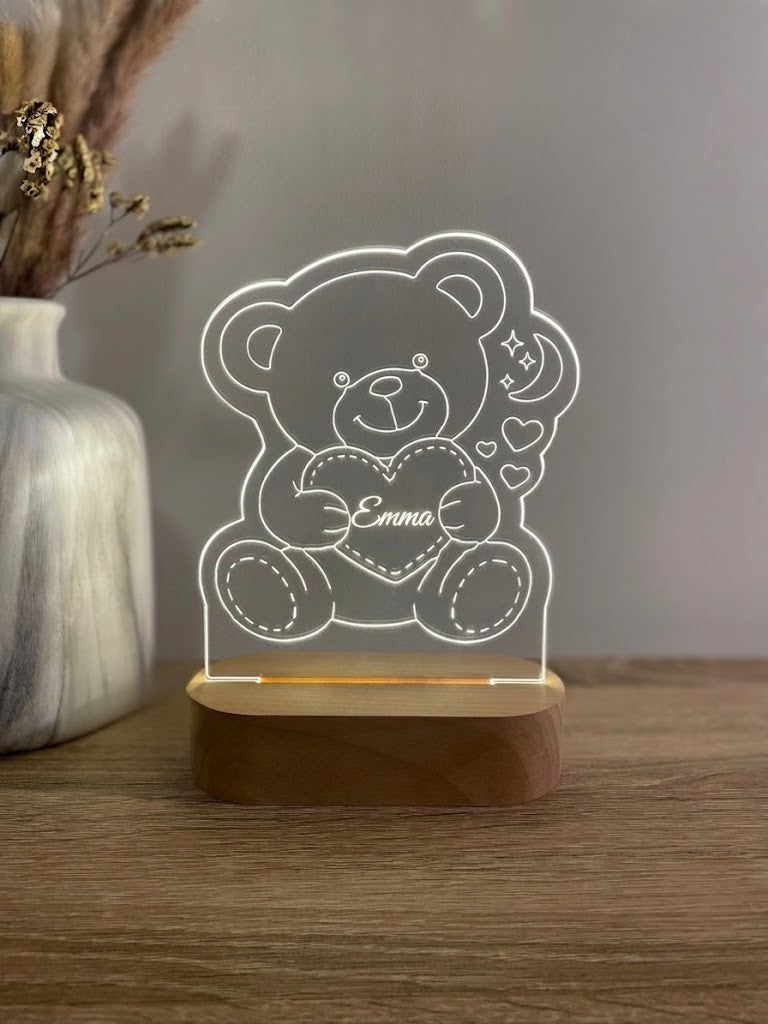
A personalised night light combines two things a generic version does not: a soft, ambient light suited to a bedroom at night, and a design engraved specifically for one child, usually their name alongside a chosen theme or icon. The personalisation is not printed on or stuck onto the light afterwards; it is engraved directly into the material the light shines through, so the design is a permanent part of the piece rather than a removable label.
How DreamLight™ Is Made
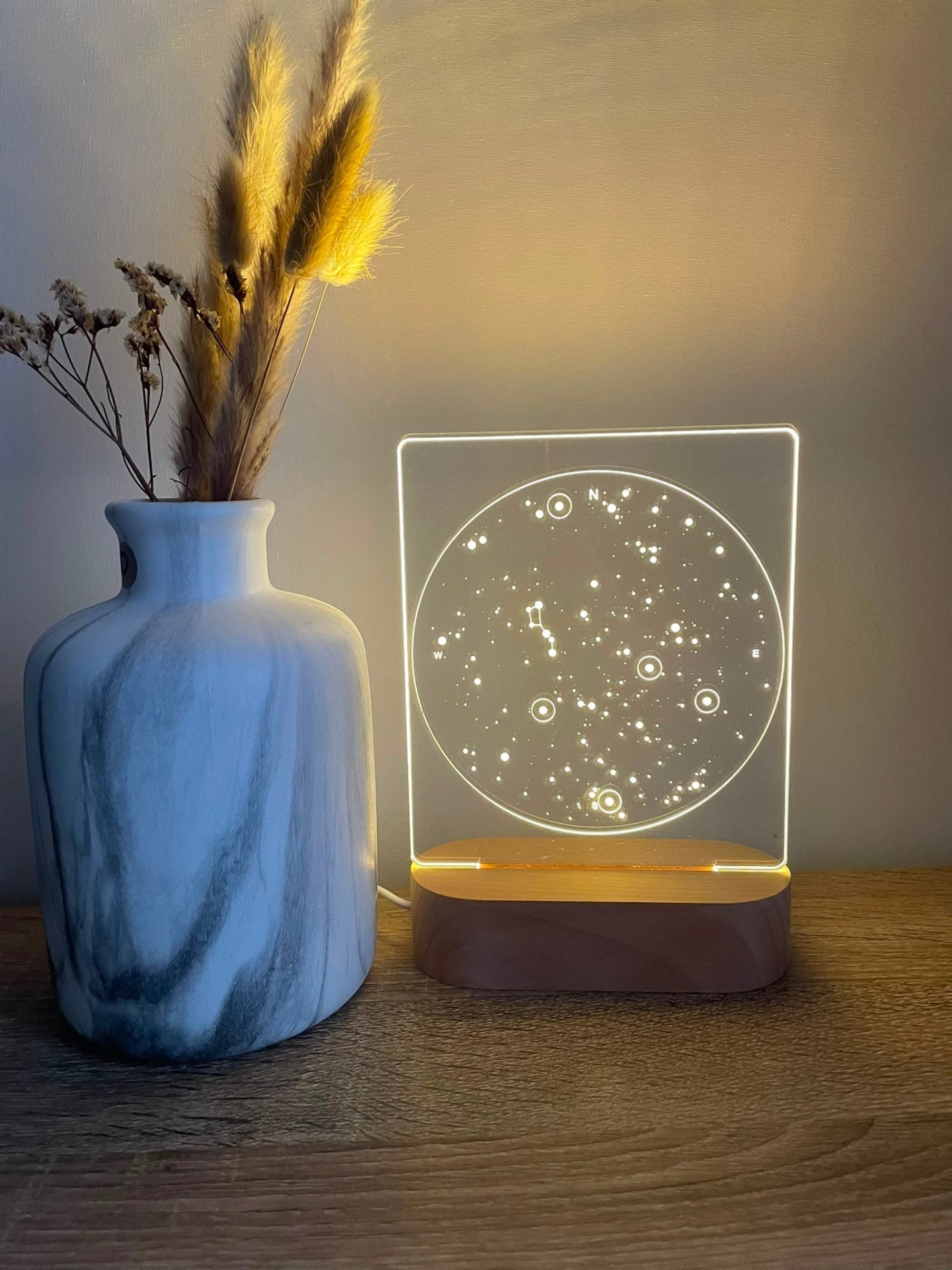
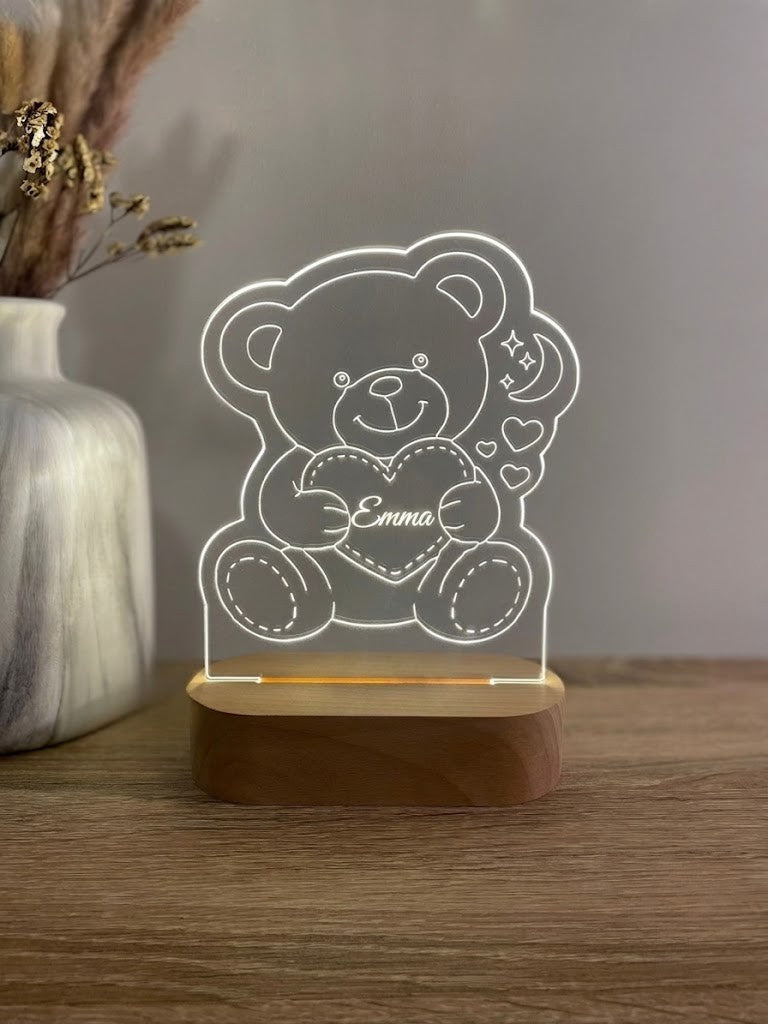
With DreamLight™, a child's name and chosen theme are laser engraved into acrylic, then set into a base containing the light source. When switched on, the light passes through the engraved lines, making the name and design glow softly rather than sitting as a flat, unlit shape. This is different from a light with a printed or painted design, where the pattern does not interact with the light itself.
3-Color Light vs RGB: What the Options Mean
- 3-Color Light — cycles between a small, fixed set of warm tones, offering a simpler choice suited to families who want a straightforward, consistent glow without adjusting settings
- RGB — allows selection from a much wider range of colours, suited to families who want to fine-tune the exact tone, or a child who has a specific favourite colour
Neither option changes how the engraving itself works; both light the same engraved design, just with different colour ranges available. See 3-Color or RGB Kids Night Light? How to Choose Your DreamLight™ for a closer look at choosing between them.
What Can Be Personalised
- The child's name, spelled exactly as they use it
- A theme or icon, chosen to reflect something the child likes
- The light setting, 3-Color Light or RGB, matched to what suits the child and the room
What Makes It Different From a Generic Night Light
A generic night light is made to suit any child in any room. A personalised one is built around one specific child's name and interests, which changes what it is: not simply a light with a decorative pattern, but a keepsake that happens to also function as a light. This is part of why it tends to stay meaningful well beyond the years a child actually needs a night light for reassurance.
Mistakes to Avoid
- Choosing RGB for the novelty of colour-changing light when a child actually sleeps better with a single, consistent tone
- Assuming the theme needs to be generic or gender-neutral rather than something the specific child genuinely likes
- Not double-checking the spelling of a name before submitting, since it will be engraved permanently
Frequently Asked Questions
What is a personalised night light, exactly?
It is a soft-glow lamp engraved with a specific child's name and a chosen theme, designed to combine the reassurance of a night light with a keepsake made for that one child.
How is the personalisation actually applied?
The name and design are laser engraved directly into the acrylic the light shines through, rather than printed or stuck on, making it a permanent part of the piece.
What is the difference between 3-Color Light and RGB?
3-Color Light cycles through a small set of warm tones for a simple, consistent glow, while RGB allows selection from a much wider colour range for families who want more control over the exact tone.
Does the light option affect how the engraving looks?
No. Both options light the same engraved design; they differ only in the range of colours available, not in how the engraving itself works.
Can any theme be engraved alongside the name?
Yes, the theme is chosen to reflect what the specific child likes, rather than being limited to a generic or preset design.
Will I see the design before it is engraved?
Yes. A digital Design Proof is sent by email so you can review the name, theme and layout before production begins.