What to Engrave on a Wooden Wine Box: Message and Layout Ideas by Occasion
Choose one meaningful message, then decide whether a name or date makes it personal. A wedding inscription usually leads with two names. A thank-you should make gratitude clear. A housewarming can celebrate a family and a new beginning without showing a full address. Short, considered wording is more likely to remain meaningful after the wine is enjoyed.
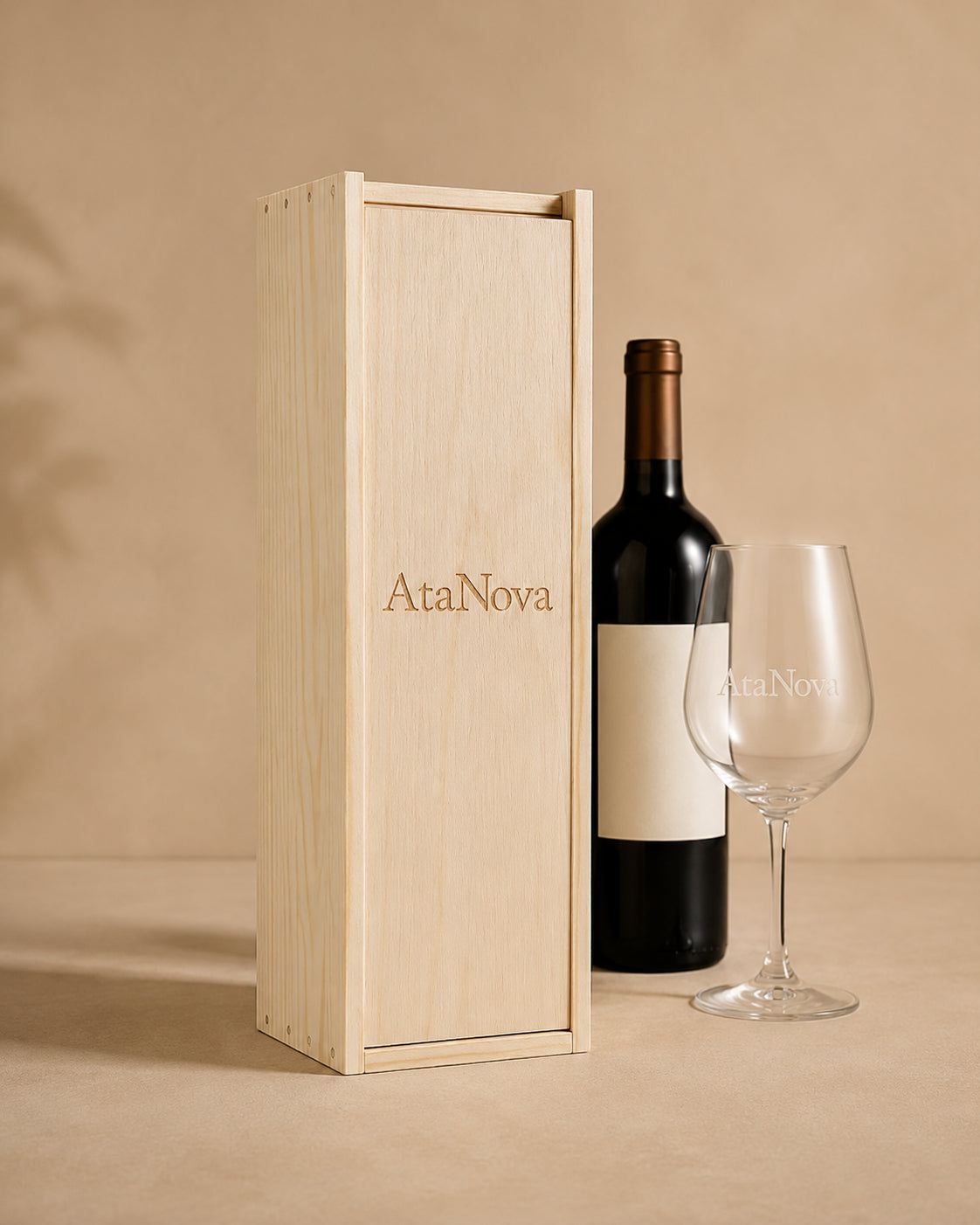
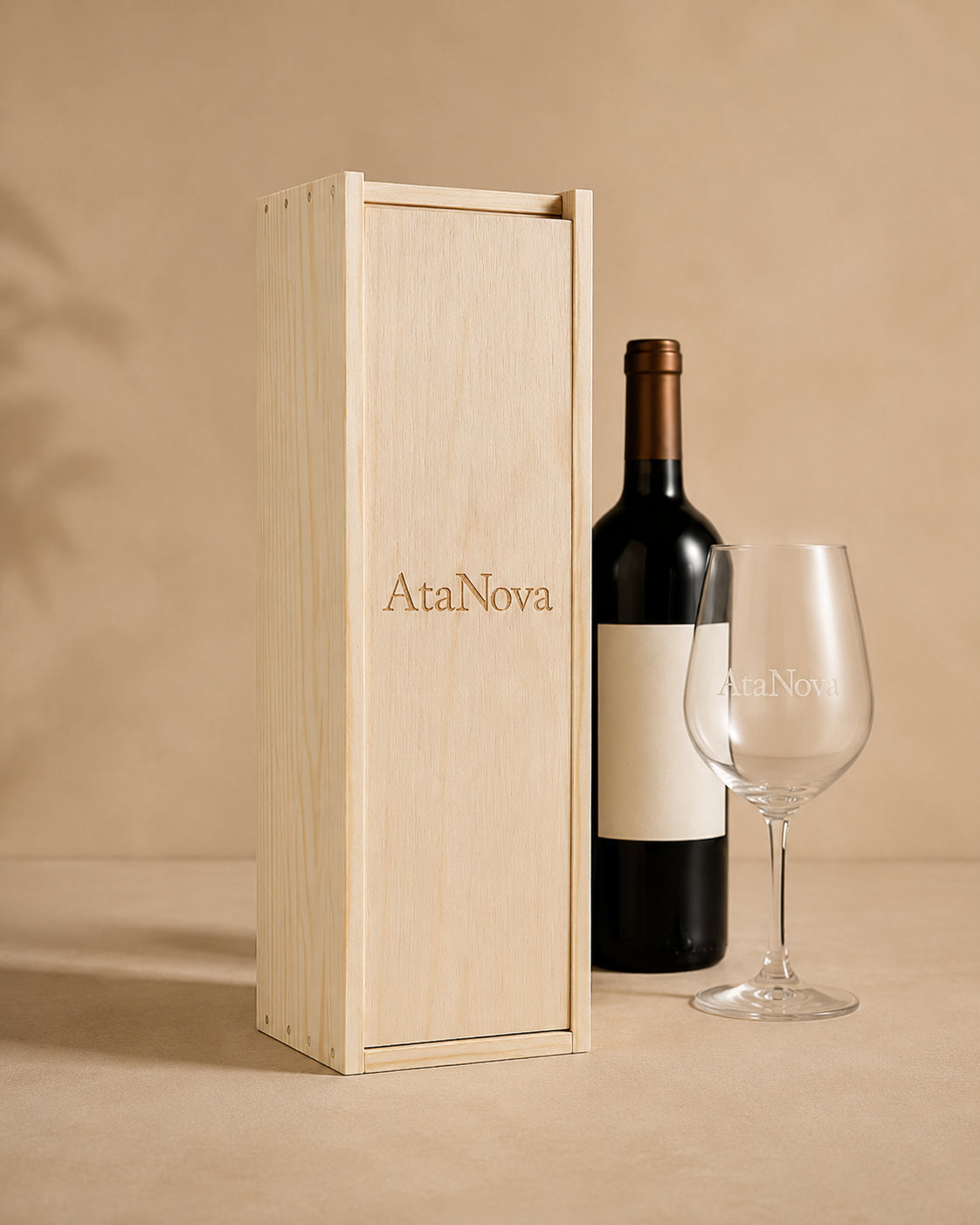
These are adaptable examples, not ready-made templates or guaranteed character limits. AtaNova laser-engraves the removable sliding lid of its spruce wine box and provides a digital Design Proof before engraving. The best composition is confirmed on that real preview, not by assuming a sentence fits because it looks fine on screen.
First decide what the message must say
Start with the recipient, the occasion and one feeling. A simple name or sincere thank-you can be stronger than a paragraph. Decide whether the emphasis belongs on the person or the event; do not start by choosing a decorative font. Think about how the text will sound to the recipient and whether it will still be understood years later.
If you do not know the recipient's preferred tone, avoid private jokes and elaborate quotations. A name and a confirmed date are safer than a phrase that may feel impersonal or too intimate. The design should make sense even when the wine bottle is no longer inside.
Use one, two or three lines with a clear hierarchy
One line: quiet and timeless
For Emma, E & N or With thanks can stand alone. The wood grain and empty space form part of the composition. Do not fill the entire lid simply to use its available area.
Two lines: main message plus context
Emma & Noah / 14 June 2027 puts names first and date second. Thank you, Sophie / From the whole team makes gratitude the main message. This is often easier to scan than several competing sentences.
Three lines: only when each has a purpose
Our new home / The Janssen family / 2027 uses occasion, identity and year. Keep one line more prominent and the other details subordinate. Three equally long lines tend to compete for attention.
- Minimal: initials or one name.
- Personal: two names and a checked date.
- Contextual: short occasion, name and year.
Wedding: engrave what the couple will want to keep
Names and a verified wedding date are usually more durable than a long toast. Ask how the couple spells their names and whether they prefer initials, surnames or first names. A couple who values minimal design may prefer their initials alone; a more expressive gift may include one meaningful line.
- Emma & Noah — 14.06.2027
- To your next chapter
- Together is a wonderful place to be
- For the newlyweds — with love
- A toast to your day — 2027
Every example date and name here is fictional. Replace them with correct details and let the Design Proof determine the final layout. A long wedding speech belongs on a card, not necessarily on the wooden lid.
Anniversary: verify the number before engraving it
A ten-year anniversary only means something if you are certain what the ten years refer to: a wedding, a first meeting or another milestone. If unsure, use a confirmed date or the couple's names instead. A thoughtful short sentence is better than an impressive but incorrect number.
- Still us — Emma & Noah
- Ten years, countless memories
- To every chapter still to come
- Our story continues — 2027
- Always better together
For a strong anniversary number, make it the focus and place the names beneath. For an understated look, lead with the names and let the year sit quietly on the second line.
Housewarming: celebrate home without publishing an address
A wooden wine box can mark moving into a first house, a shared apartment or a new family home. Full postal addresses are rarely necessary and can expose personal information on a keepsake. A family name, move-in year or short welcoming sentiment is usually enough.
- To new beginnings — The Janssen family
- Home sweet home — 2027
- New keys, new stories
- A toast to your new place
- May beautiful memories begin here
Check which family name is appropriate if the household has different surnames. For an individual moving into a new place, Welcome home, Sophie may be more natural than an address engraved in small letters.
Retirement: focus on the person, not a job title
Retirement wording can recognise effort and open a hopeful new chapter. Not every recipient wants the employer or number of working years on a home keepsake. If the gift is from colleagues, let the person's name lead and put the group signature in smaller text.
- Your next adventure begins, Peter
- Thank you for the years together
- Well earned — enjoy every moment
- A new chapter, a new toast
- From your colleagues, with appreciation
Use inside jokes only when the recipient would genuinely enjoy seeing them at home. Job titles and corporate details are not automatically the most meaningful part of the message.
Thank-you inscriptions: be specific but brief
For hosts, neighbours, friends or people who helped during a difficult task, a straightforward thank-you often feels more sincere than a grand quotation. The recipient should not need to remember an entire conversation to understand the inscription.
- Thank you, Sophie
- With heartfelt appreciation
- For everything you did
- A small toast to a big help
- From all of us, with thanks
Thank you, Sophie / From the Janssen family is a clear two-line option. The giver is identified without competing with the person being thanked. Make sure the recipient would be comfortable with the message being visible at home.
Corporate messages should not look like advertisements
A business name, short note of appreciation or client name may work on a wine box. But filling the lid with a slogan, website and multiple logos makes it harder to read. Optional logo engraving depends on suitable artwork and a viable composition, so do not assume that any uploaded image can be engraved.
- Thank you for your trust
- To a successful collaboration
- With appreciation — Team Nova
- Celebrating our partnership
- Warm wishes from the team
The full logo-file workflow, multiple personalised recipient names and bulk business ordering are a separate corporate topic. Here, keep the decision on the number of words and the hierarchy of the message.
Names, initials and dates require careful checking
Confirm the order of two names and whether initials or full names are preferred. Double-check hyphens, accents and compound surnames. Date-only designs can be confusing across markets: writing 14 June 2027 is often clearer than an ambiguous numeric format.
- Initials: E & N — minimalist, but sometimes unclear.
- Names: Emma & Noah — personal and direct.
- Names + date: Emma & Noah / 14 June 2027.
- Family: The Janssen family / 2027.
- Sender: With thanks / From the team.
The language should sound natural to the recipient. An English cliché translated word for word into Dutch, German or French can lose its warmth. Use the right idiom and proofread all special characters before approving the design.
Typography on the sliding lid: one focal point
Choose what must be noticed first: the name, the short greeting or a meaningful number. A date and sender signature should support the main line, not compete. Decorative lettering can be appropriate for a short name, while a clearer font may work better for small contextual text.
Natural spruce has grain and variation. Very fine strokes and tightly packed ornament can reduce legibility. A digital layout is not a promise that every line fits physically; use the actual Design Proof to judge spacing, placement and balance on the removable wooden lid.
How to shorten a message without losing meaning
Before: too many ideas
Dear Emma and Noah, we wish you all the happiness in the world for your wedding day and a wonderful lifetime together, with love and best wishes from everyone.
After: one clear composition
Emma & Noah / Your next chapter begins / 14 June 2027. The names, occasion and one sentiment remain. This is a proposed layout, not a guarantee that the wording automatically fits.
- Remove repeated congratulations.
- Keep one confirmed milestone date.
- Do not combine a quotation with a long greeting.
- Use a short sender line, if any.
- Cut phrases that require an explanation.
Ten checks before approving the Design Proof
AtaNova provides a digital Design Proof before engraving. Approval should mean you have checked both the content and its placement. A permanent engraving makes careful review especially important.
- Both names are spelled correctly.
- Accents, punctuation and hyphens are right.
- Initials appear in the intended order.
- Day, month and year are verified.
- Line breaks read naturally.
- The most important line is easy to identify.
- Any logo artwork has been assessed as suitable.
- The design has space around edges and closure details.
- The words still make sense after the bottle is opened.
- The final preview is exactly what you approve.
When a short message is the better choice
Choose fewer words when the name is already long, the event is obvious or the recipient likes minimal objects. A good inscription does not need to be centred around a long poem. Space around a short line can make it feel more considered.
Avoid unrequested private details, jokes that could become awkward and unsupported promises. A box can remain on a shelf for years; consider whether every engraved word will still feel appropriate.
Keep wording separate from technical product details
AtaNova's wine box is natural spruce, with options for one or two standard 750 ml wine bottles. The permanent engraving is on the removable sliding wooden lid; wine is not included. These facts define what is being personalised, not how many characters will fit. Do not infer a fixed text limit from the number of bottles.
Exact product dimensions, care, lid position and optional logo-file information belong to the specialist technical guide. This article focuses on choosing and arranging the message, not replacing that guide.
Choose the box and follow the right specialist guide
Start with the Personalised Wine Box to select the bottle option and personalisation. For dimensions and physical care, read the technical Wine Box guide. If you still need to decide whether a wine box suits this particular recipient, consult the Wine Box gift-suitability guide. Each page has a distinct purpose.
Related guides and collections: If the box is part of a larger present, see the wine gift pairing guide; for company-logo artwork and order briefs, read the branded wine-box ordering guide. Explore current options in the Drinkware & Bar Gifts collection.
Frequently asked questions
What if I cannot decide on a message?
A correctly spelled name or initials and one short sentiment is a good starting point; choose to suit the recipient.
Can I engrave an entire wedding speech?
Do not assume so. Shorten it to one meaningful sentence and review its layout in the Design Proof.
Does the engraving have to be in English?
No. Choose natural language for the recipient and check spelling carefully.
Can I write the date with digits only?
Yes, but spelling out the month can prevent confusion across different countries.
Can a company logo be combined with text?
Optional logo engraving depends on suitable artwork and a viable layout; confirm this in the proof process.
Is the design printed on the box?
No. The removable wooden sliding lid is laser-engraved.
Is wine included?
No. The wooden box is sold without wine.
Can a spelling mistake be changed after approval?
Check the preview before approval. Contact the atelier immediately if something is wrong; permanent engraving is not simply reversible.
A message that still matters later
Choose the few words that identify a real person and occasion, let the most important line lead, and check every detail in the Design Proof. The ideal inscription keeps its meaning even when the wine has been enjoyed.