How to Personalise a Wedding: Save the Date to Reception
A wedding can be personalised at almost every stage, from the save the date that first announces it to the welcome sign, table settings and cake that mark the celebration itself. AtaNova's range covers each of these moments individually. This guide walks through the timeline of a wedding and shows which personalised piece fits which stage, so you can plan ahead rather than choosing pieces separately at the last minute.
The Wedding Personalisation Timeline
Most couples personalise a wedding in stages, starting months before the day and continuing through to gifts exchanged afterwards. Thinking about it as a timeline, rather than a single shopping list, makes it easier to order each piece with enough lead time.
Months before: announcing the date
The earliest personalised piece in most weddings is the Save the Date. A personalised save the date magnet, sent to guests before formal invitations, gives the couple's names and date a physical presence in someone's home from the very start of the engagement period. For guidance on wording, quantity and material, see Save the Date Buying Guide.
Before the day: marking a private moment
Some couples choose to personalise something for themselves before the wedding itself, such as a NovaMap™ star map marking the night they got engaged, or the date and location of the proposal. This sits apart from the guest-facing pieces and is usually a private keepsake rather than something displayed at the event. See NovaMap™ for Weddings, Anniversaries and Births.
On the day: the ceremony and reception
The wedding day itself is where most personalised pieces come together in one place.
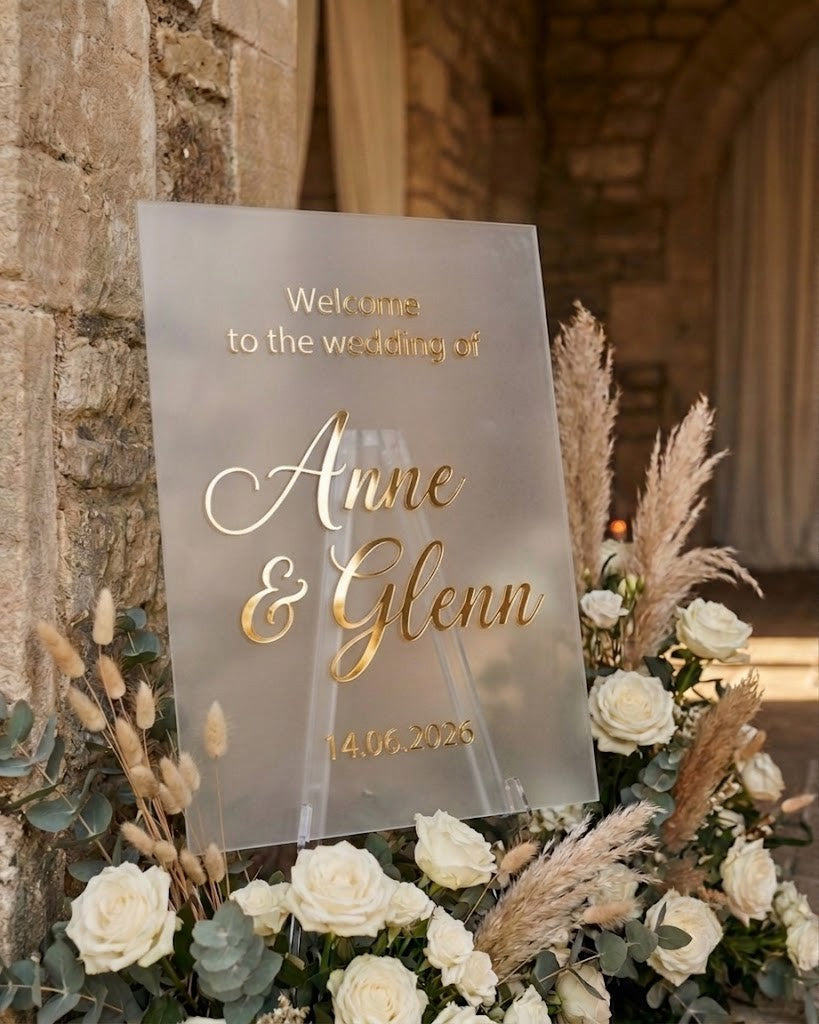
- Wedding Welcome Sign — greets guests at the ceremony or reception entrance with the couple's names and date.
- Wedding Table Numbers — coordinate with the welcome sign to guide guests to their seats.
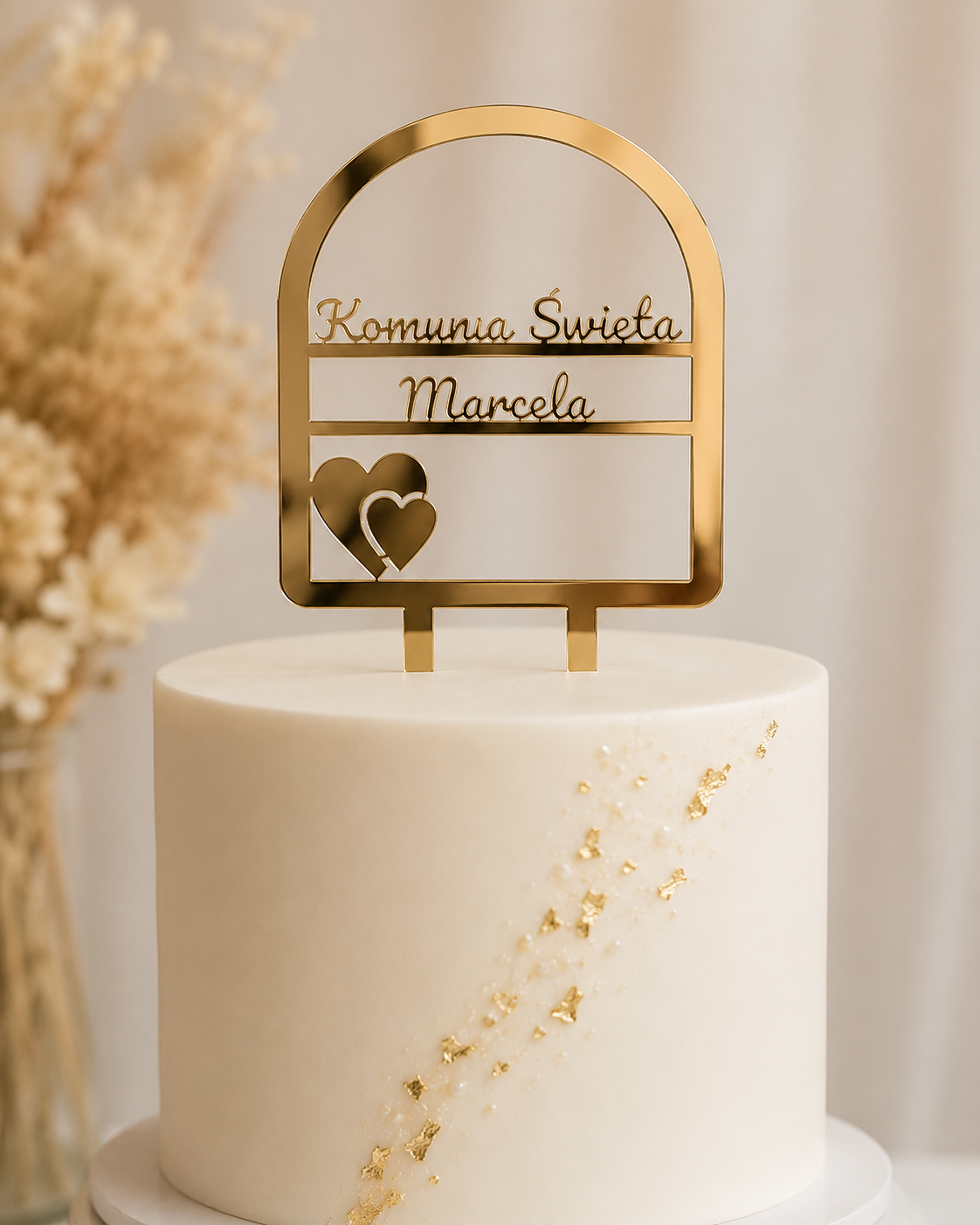
- Personalised Cake Topper — marks the cake table with the couple's names, wedding date, or a short phrase.
These three pieces are usually chosen together, since matching materials and styling across the welcome sign, table numbers and cake topper creates a more cohesive look for photos taken throughout the day. See Wedding Table Numbers Buying Guide and Personalised Cake Topper Buying Guide.
After the wedding night: turning the day into a keepsake
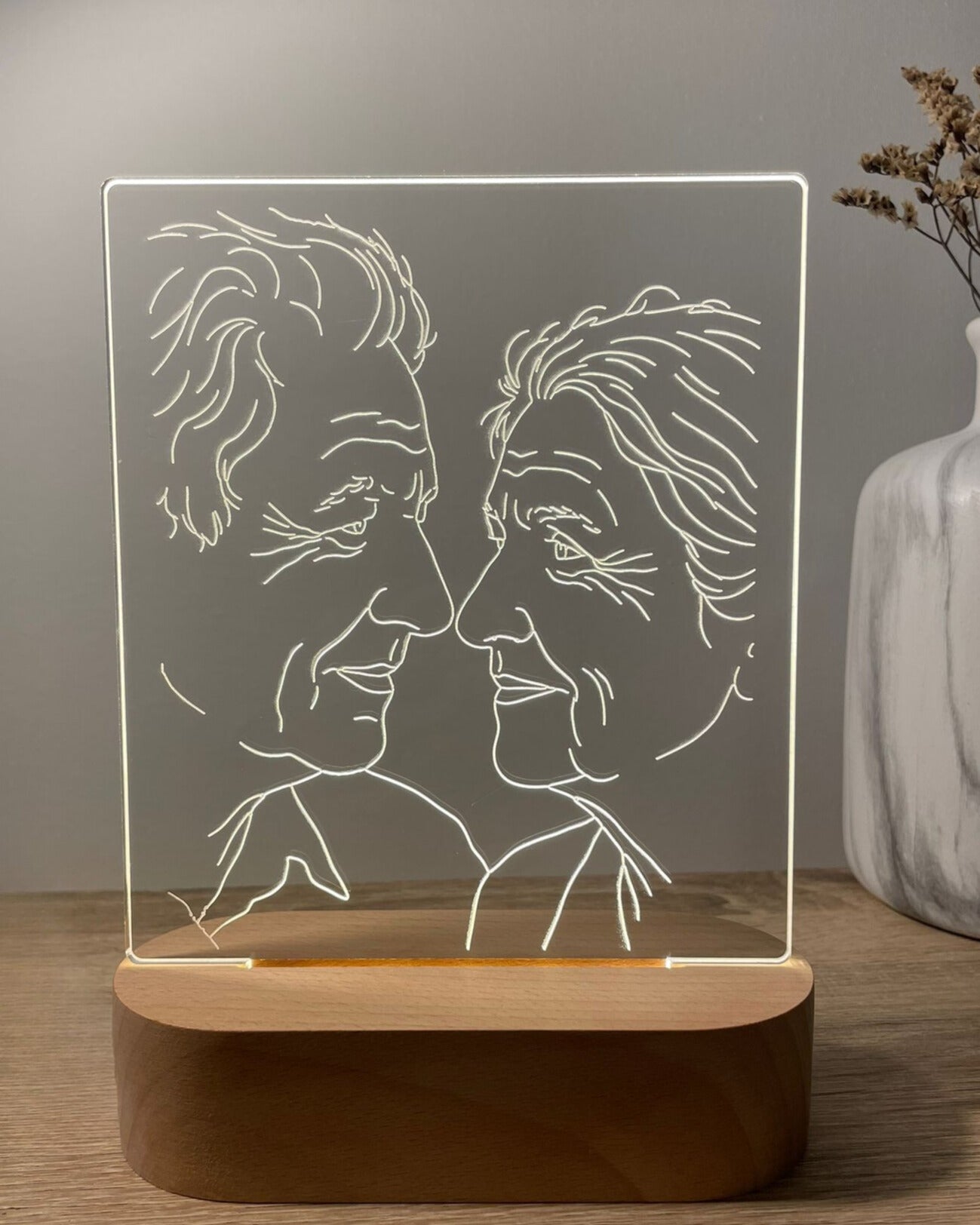
Once the wedding is over, some couples choose a piece built around a specific memory from the night itself, such as a NovaMap™ star map marking the exact time and location of the wedding, or an AuraLine™ or StoryFrame™ lamp made from a favourite wedding photo. These pieces are less about the event and more about preserving one moment from it. See A Star Map from the Wedding Night and AuraLine™ vs StoryFrame™: Which Photo Lamp Should You Choose?.
Beyond the wedding: gifts that outlast the day
For guests, parents or the couple themselves looking for something that stays relevant after the wedding rather than being packed away, see Personalised Wedding Gifts That Last Beyond the Wedding Day.
Keeping the Look Consistent Across the Day
Because the welcome sign, table numbers and cake topper are usually seen together in photos, choosing the same material and finish across all three, such as matching wood tones or the same acrylic colour, keeps the day looking coordinated rather than assembled from separate, unrelated pieces.
Mistakes to Avoid When Planning Wedding Personalisation
- Ordering the save the date at the last minute, when it is meant to be sent out months in advance
- Choosing mismatched materials or colours across the welcome sign, table numbers and cake topper
- Leaving all pieces until close to the wedding date, without allowing time to review each Design Proof properly
- Forgetting to plan a keepsake for after the day, such as a photo lamp or star map, if the couple wants something built around the wedding itself rather than only the planning materials
Before You Order: Checklist
- Save the dates ordered with enough lead time to send before formal invitations
- Welcome sign, table numbers and cake topper chosen in matching materials
- Names and dates checked for spelling across every piece
- A photo-based or date-based keepsake considered for after the wedding, if wanted
- Each Design Proof reviewed and approved before engraving begins
AtaNova prepares each order in its Antwerp atelier and delivers within 3–5 business days from the order date, once the Design Proof has been approved. Since pieces are often ordered at different times across the wedding timeline, it is worth placing each order with its own lead time in mind rather than assuming everything can be finished at once close to the date.
Frequently Asked Questions
What should be personalised first for a wedding?
The save the date is usually the first personalised piece, since it is sent to guests months before the wedding, ahead of formal invitations.
Should the welcome sign, table numbers and cake topper match?
Choosing the same material and finish across these three pieces keeps the day looking coordinated in photos, though it is not required.
What personalised piece is best for after the wedding?
A NovaMap™ star map marking the exact time and location of the wedding, or an AuraLine™ or StoryFrame™ lamp made from a wedding photo, both work well as keepsakes built around the day itself.
Can I order everything at once close to the wedding date?
It is possible, but the save the date is meant to be sent months in advance, so ordering everything at the last minute means missing that early stage of the timeline.
Will I see each design before it is engraved?
Yes. A digital Design Proof is sent by email for each piece so you can review names, dates and wording before production begins.
How far in advance should wedding pieces be ordered?
AtaNova's total delivery promise is 3–5 business days per order once the Design Proof is approved, but save the dates should be ordered months ahead, and day-of pieces are best ordered several weeks before the wedding to allow time for review.